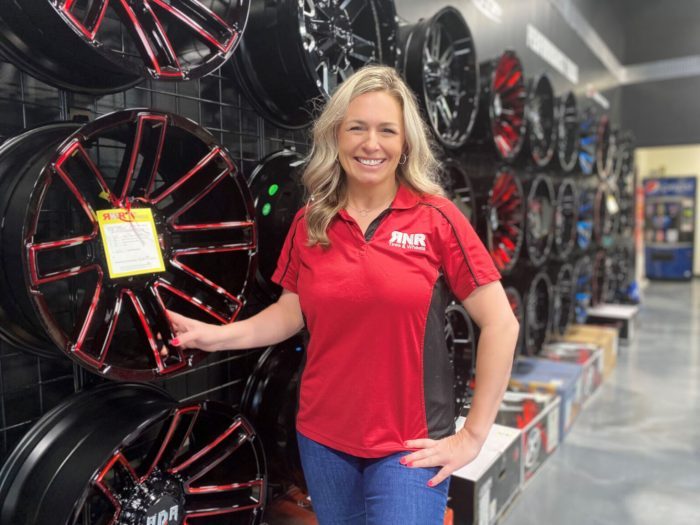
From rising through store-level roles to launching Women of RNR, Breanne Braddock shares how mentorship, connection, and opportunity are shaping the next generation of leaders in the automotive industry.
I didn’t set out to build a career in automotive. Like a lot of people in this industry, I found my way into it through an opportunity that grew over time. I started out in a store-level role more than 20 years ago, working for the same owner I’m still with today. Back then, I was focused on learning the business and taking on whatever opportunities came my way.
I was usually the only woman in the room. That was just the norm. You figure out pretty quickly how to speak up, when to stand your ground, and how to earn trust, not just from your team, but from customers who may not expect to see you in that role. I spent a lot of time early on making sure I knew the business inside and out because I didn’t want there to be any question about whether I belonged.
That was especially true when it came to the operational side of the business. Across the automotive industry, things like shop management, inventory, and the technical side aren’t always areas women are immediately exposed to early on, and those are critical for long-term growth. What I’ve seen over time is that when that exposure is there, when women are given the opportunity to step into those parts of the business, they excel.
Over time, I moved through sales, running a store, stepping into marketing and team development as we grew. Eventually, I stepped into my current role supporting 13 locations across four states. Every step came with a learning curve, but also with people who were willing to invest in me, even when I was still figuring things out. That’s a big part of why I care so much about creating those same opportunities for others now.
Nationally, women make up just 16% of the automotive repair workforce. In our region, about 30% of our store managers are women. That didn’t happen by accident. It happened because someone gave them a shot, because they were supported, and because they were given opportunities to learn parts of the business they might not have been exposed to otherwise.
This was the driving force behind launching Women of RNR, a peer-led initiative designed to support connection, development, and retention among women across our organization. For us, the goal is simple: take what we’ve learned, earned, and experienced over the years and create more accessible pathways for the next generation of leaders. Many of us didn’t have a clear roadmap when we started. Now, we have the opportunity and the responsibility to help build one.
What I’ve noticed over the years is that women in this industry aren’t lacking in ability, they just often don’t have the same visibility or built-in support systems. In a multi-unit environment, that gap can show up quickly. If people don’t see a path forward or feel supported in getting there, it impacts retention, engagement, and ultimately the strength of your bench.
That’s something I’m intentional about now, making sure those opportunities are more visible and accessible than they used to be. After attending a women’s automotive conference last year, I realized we needed to create something of our own. Not another training or a meeting focused on numbers, just a space where women across our stores could connect. That’s how Women of RNR started.
It’s simple. We host monthly connection circles, led by different women across our locations. There’s no agenda tied to KPIs or daily operations. Sometimes we talk about goals. Sometimes it’s about confidence or learning how to say no without feeling guilty. Sometimes it’s just listening. Women join from their stores, cars, or home, wherever they can carve out a few minutes.
In a short time, I’ve seen a shift. More confidence, more willingness to speak up, more connection between people who may have never crossed paths otherwise. Mentorship has developed naturally with women reaching out to each other, sharing experiences, asking questions, supporting each other through challenges. That kind of connection is hard to build day-to-day, especially when you might be the only woman on your team, but it makes a real difference.
When people feel supported, they stay. They grow. They start to see a future for themselves that maybe they didn’t see before. And in a business like ours, where strong store-level leadership directly impacts team performance and the customer experience, that kind of growth carries across the entire operation.
Franchising is built on systems, processes, and consistency, but it only works when the right people are in place to execute it effectively. For me, this work is about making the path a little more visible and a little more accessible. Sometimes it’s having a conversation that helps someone see their potential. Sometimes it’s giving them exposure to a part of the business they’ve never touched. Sometimes it’s creating a space where they can ask questions without feeling the need to prove themselves.
We’re also building structured opportunities, like a women’s-only TIA certification course, to give hands-on experience in areas that can feel intimidating if you’ve never been exposed to them. It’s not about separating; it’s about building confidence, so women are ready when they step into those environments.
For women looking to grow into leadership roles, especially in industries like this, my advice is always the same: don’t wait until you feel completely ready. Say yes to the opportunity. Learn the business. Ask the questions. Put yourself in the rooms that feel a little uncomfortable at first. That’s where the growth happens. And find your people. A mentor, a peer, or a group like Women of RNR can make all the difference.
Most importantly, know that you belong there. This industry is changing. Every time a woman steps into a leadership role, speaks up in a meeting, or takes on something new, it moves things forward. I’ve seen what happens when women are given the opportunity. They don’t just succeed; they raise the standard for everyone around them. In a business built on people, that kind of impact doesn’t stay in one store; it carries across the entire system.