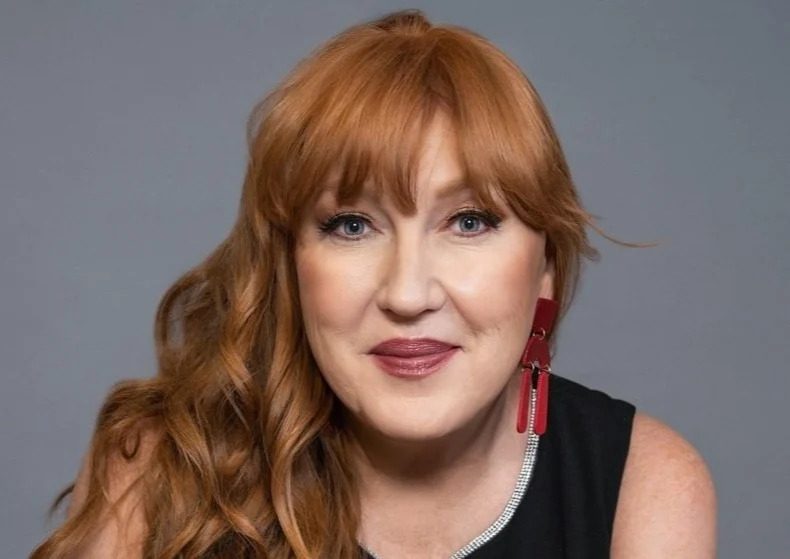
Name: Cindy Sheller
Owner: Caring Senior Service of Tucson, Arizona; Caring Senior Service of Dallas Northwest; Caring Senior Service of Dallas Mid-Cities; and Caring Senior Service of Las Vegas
- What initially drew you to senior care, and how did that passion influence your decision to invest in this type of business?
I’ve been in the healthcare field in some capacity since 1994 and specifically in home healthcare since 2004. My passion for senior care was shaped both by personal experiences with family members and my professional background.
Over time, I realized I wanted to be in the driver’s seat as an owner, not an employee. I also saw a growing gap in how care was being delivered and managed day to day. With the increasing global demand for senior care, I saw an opportunity to build something more strategic, compassionate and scalable that would allow me to serve more seniors in my community and beyond.
- You operate across multiple states. What made you confident in scaling your business beyond a single market?
My confidence in scaling came from having proven operational systems, strong IT infrastructure and diversified revenue streams that help mitigate regional risk. I also knew that our model was highly replicable—from training and marketing to care delivery—which allows us to maintain a consistent client experience across markets.
As a leader, I’ve been intentional about building teams and leveraging both technology and existing staff to support growth, whether remotely or in person.
- Many professionals today are rethinking traditional career paths. What advice would you offer them?
In many traditional professional settings, success is measured by efficiency and profit. In home care, the shift is that our “product” is serving people. If you lead with a genuine passion for serving others, the financial results will follow. If profit is the only focus, you may encounter challenges that can’t be solved through traditional business thinking alone.
- How do you balance building a successful business while staying focused on purpose and impact in the communities you serve?
In home care, there is always a balance between profitability and purpose. If you focus only on the numbers, your culture will suffer. If you focus only on the “heart,” you won’t have the margins to sustain your mission.
Your caregivers and staff are your most valuable asset, so how you hire, compensate, support and lead them directly impacts both your culture and the quality of care delivered. That’s why it’s equally important to measure both the human side and the business side of caregiving.
Tracking both hard and soft KPIs provides the operational insight needed to make informed decisions and pivot when necessary, ensuring you can grow sustainably while still delivering a quality service.
- What are some of the biggest misconceptions about investing in a people-first business like senior care?
One common misconception is that you need to be a healthcare professional to own a senior care business. In reality, many successful and compassionate owners come from non-healthcare backgrounds. The key is strong leadership, marketing and relationship-building skills.
Another misconception is market saturation. While there may be many providers, the market is still underserved when it comes to high-quality, compassionate care. Demand continues to outpace the supply of excellent providers, and that need is expected to grow significantly over the next decade.
There’s also a belief that massive capital is required. While adequate capitalization is important—especially in a franchise system—it is possible to start and scale with disciplined investment and strong execution.
Finally, some assume the industry is behind technologically. In reality, senior care is rapidly evolving, with technology and AI playing an increasing role in both operations and care delivery.
- Can you share a moment in your career that reinforced why meaningful work matters just as much as financial success?
A defining moment for me was the passing of my husband in 2022. It was an incredibly difficult time, and my youngest son was just 14. In that moment, I realized how important it was to be connected to meaningful work.
If I hadn’t built a business I truly believed in, I likely would have stepped away. Instead, the purpose behind what we do gave me a reason to continue. I was also deeply supported by my family and the Caring Senior Service community, who stepped in to help both personally and professionally. That experience reinforced for me that success isn’t just financial; it’s about impact, purpose and the people around you.
- Looking ahead, how do you see demand for senior care and values-based business ownership continuing to evolve?
The demand for senior care will continue to grow significantly. Today, approximately 90% of seniors prefer to age in place at home, and the first Baby Boomers turn 80 in 2026.
We’re also seeing a shift toward more value-based, high-precision care models. Higher-acuity care in the home is expected to increase substantially, while the availability of family caregivers is not keeping pace. Private pay is becoming more common as families seek more personalized and immediate care solutions.
But organizations with strong values and purpose will have a competitive advantage, particularly in recruiting and retaining caregivers. A values-driven culture attracts higher-quality talent, which ultimately supports sustainable growth.
Finally, technology will also play a major role, driving efficiency in operations and enhancing care delivery.