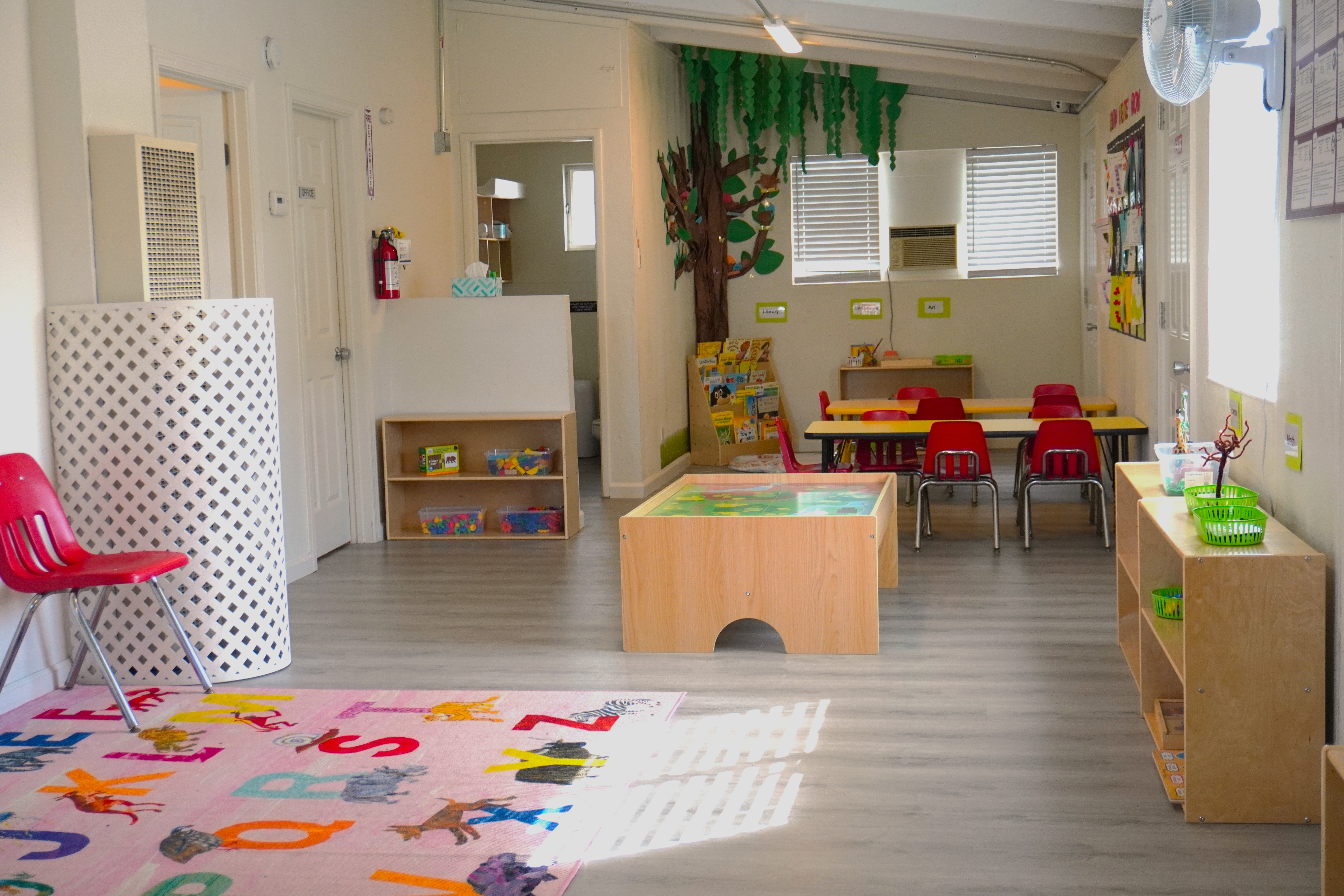
In the US, roughly 46 percent of children live in a “childcare desert” or an area without access to affordable, quality childcare. For those who do find a program, waitlists can range from six months to over a year. These numbers show that there is no shortage of room for early childhood education to grow.
The opportunity may be there, but so is the common perception that childcare franchising is nearly impossible to break into, weighed down by seven-figure initial investments, limited real estate options and models that don’t allow for growth beyond a single center.
When potential franchisees start their conversations with Building Kidz School, the initial questions typically focus on construction and location. Do they need to build from the ground up? Can they deviate from a prototypical layout with a formulaic design and floorplan? They raise valid concerns about finding affordable real estate in their markets, but they’re pleasantly surprised when we share a different formula for growth, one that puts building conversions, second-generation retail and office flex spaces front and center. This investment in real estate flexibility is intentional, and it’s a strategy for growth that franchisors should not ignore.
Large-box construction isn’t the challenge for us. We know how to build a school from the ground up and do it well, and we’ll keep doing that where it makes sense. However, the more meaningful work, to us, is building pathways for candidates who might otherwise never have a chance to own in the early childhood education industry. It’s not about cutting square footage. We want to help operators run efficient, financially successful schools without needing extraordinary amounts of capital upfront.
Lowering the Cost of Growth.
Experienced operators know exactly what to look for when evaluating a franchise concept, and unit level economics are most important. Regardless of the industry, profitability is the goal, and initial startup costs can make or break a deal. It’s no secret that the highest startup cost typically lands with the real estate. Throughout my career, I’ve had many conversations with franchisees evaluating multiple concepts for growth, and the same sentiment keeps coming up – flexibility to grow in non-traditional ways opens the door to expand beyond a single location. Most franchisees see the value in operating multiple locations within the same brand, but the numbers must make sense for that to work.
This year, the International Franchise Association reports that the initial investment to open a new franchise typically tops seven figures, with real estate accounting for a significant share of that cost. Regardless of how the land is acquired, that’s just part of the equation.
New build construction also comes with a hefty price tag, a lengthy permitting process and inevitable construction delays. For many prospective franchisees, that’s enough to stop their franchising journey before it ramps up. When franchisors build a model that allows for growth in unexpected and non-traditional places, that cost drops significantly, improving the path to profitability over time.
Tapping into Unexpected Locations
Looking beyond new build construction to find the right real estate in an ideal market isn’t just about putting a business in any available box. Standards still exist to protect the brand, but behind the scenes, franchisors are working alongside franchisees to develop new models that let a brand shine in spaces that may not have been originally intended for a school.
Conversations with commercial landlords have further validated this approach. They often have vacancies in premium locations, and childcare has typically not been top-of-mind as a possible tenant, but a flexible approach turns it into a win for landlords and franchisees.
Additionally, this model shows directly how the pool of qualified candidates grows as initial investment costs come down, and a model built to adapt becomes a competitive advantage and a powerful growth tool.
At Building Kidz, we consider a range of formats for growth, including acquisitions, residential conversions, new site development in retail centers and standalone buildings, and partnerships with churches, corporations and business centers. In urban areas where new construction opportunities are limited but demand for quality childcare is high, this approach has proven invaluable. Our brand standards and ability to mold into different spaces allows us to convert a given location into a Building Kidz School quickly while ensuring consistency across the entire system.
One of our multi-unit franchisees, Josh Thomas in the Baltimore, Maryland market, is preparing to open his third Building Kidz location, and each of his schools is a conversion. Josh opened his first location in 2023, and thanks to strong consumer demand and a direct path to profitability, he’s opening his third less than three years later. His success, like that of many other Building Kidz franchisees, is a case study in the power of real estate flexibility, and we’re replicating that path in markets across the country.
A Crowded Market, A Clear Advantage
With more than 100 childcare and child-service-focused franchise businesses in the marketplace, there is sizable industry growth opportunity, and demand for quality childcare remains high across the country. By building a model that looks beyond a standard new build, the path to scalability with passionate, qualified franchisees becomes far clearer.
That flexibility is essential to how we operate, and it continues to unlock growth in new ways. Franchisees appreciate being able to bring a school to an in-demand area that once seemed cost-prohibitive, and success shows up in high enrollment numbers, as well as in feedback from families who benefit from having quality childcare in the right location.
Ultimately, flexible real estate pays off in more than one way – it draws in more qualified franchisees, opens better real estate and builds a stronger customer base. That’s a principle that applies well beyond childcare, but for us, it means expanding access to a broader group of owners and bringing quality childcare to more communities.