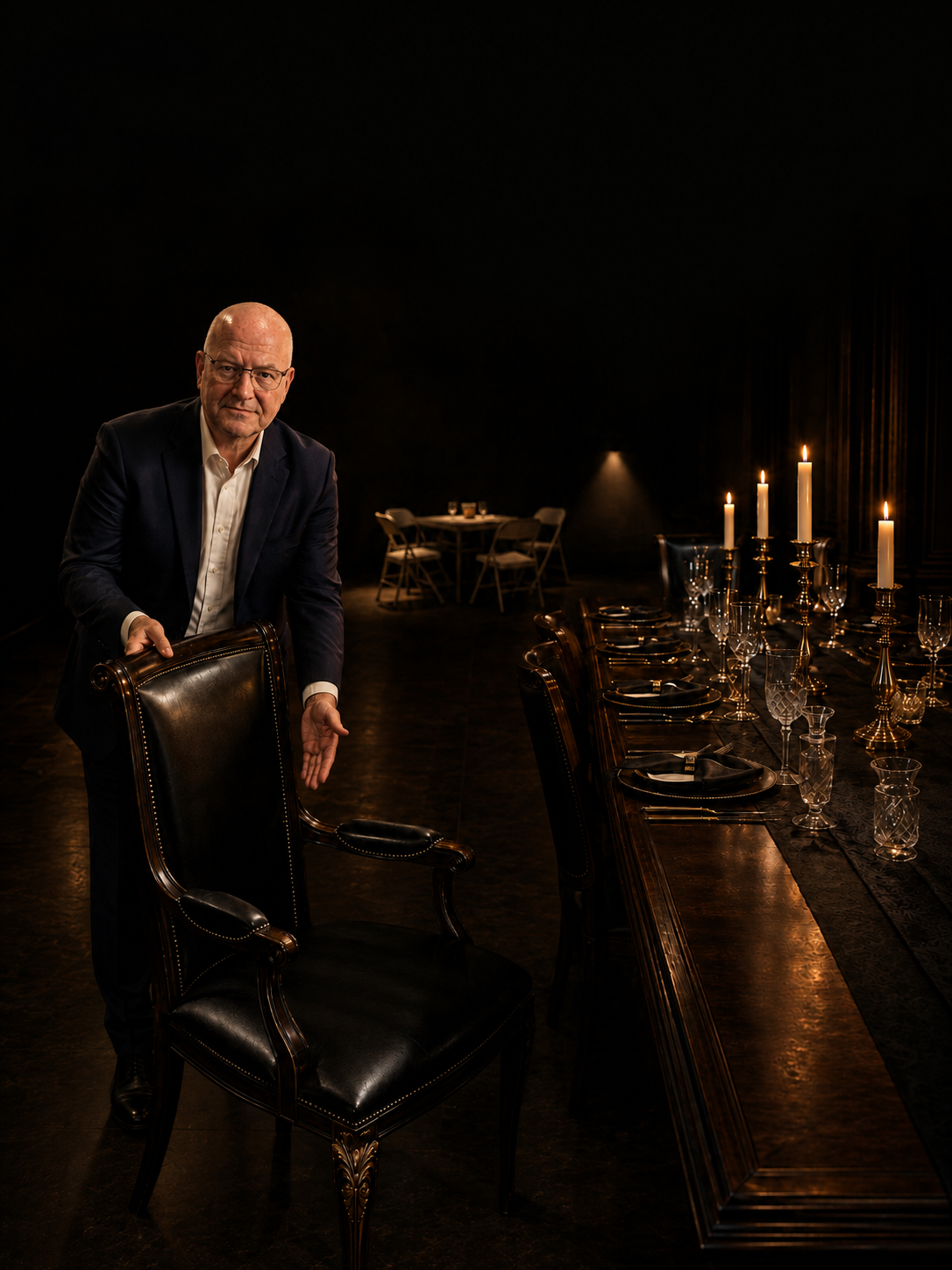
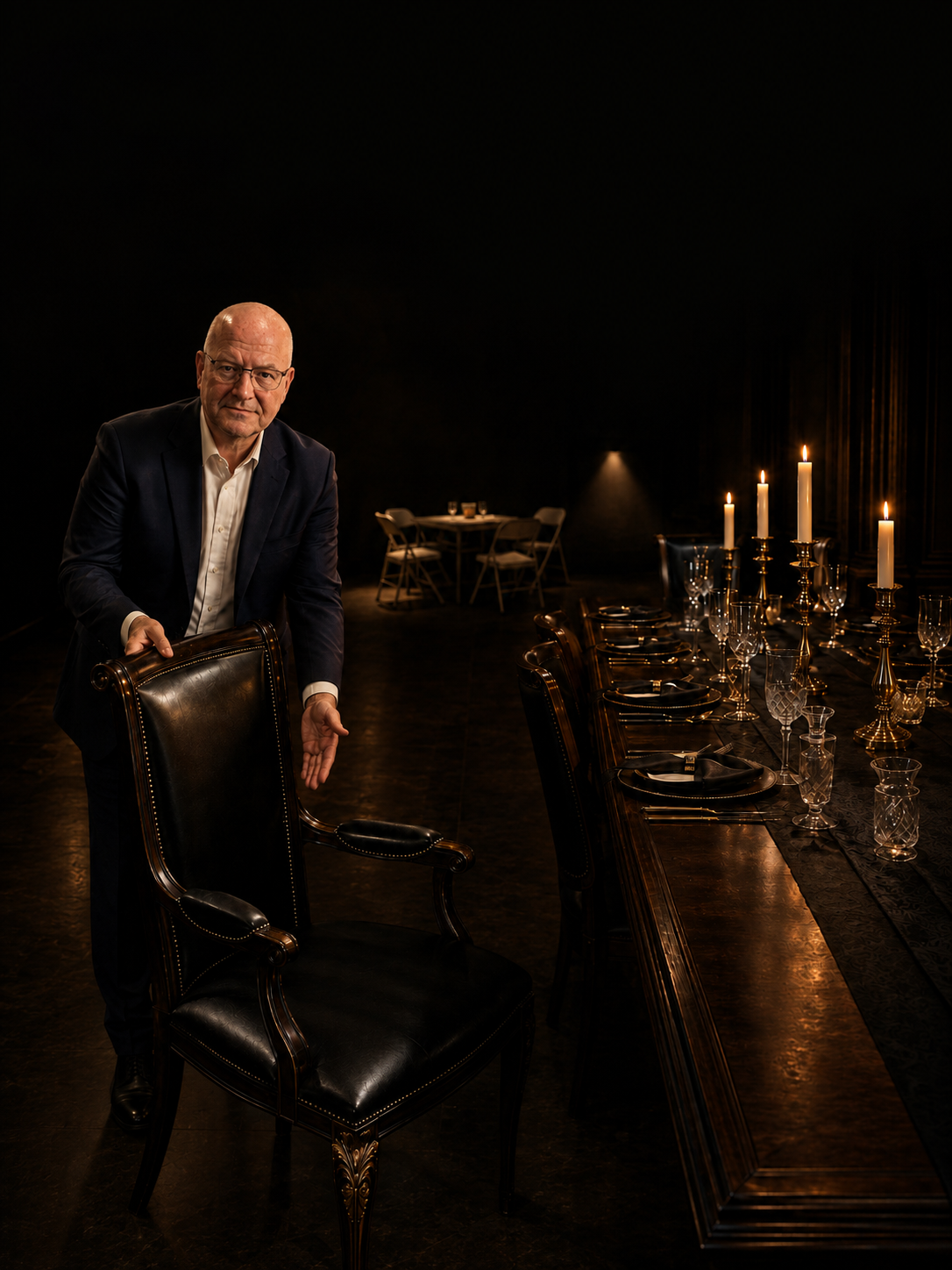
How a new class of franchise investor is claiming the economics that private equity kept to itself — and why the industry will never look the same.
MOVEMENT I — THE SHIFT
Something permanent happened in franchising. It didn’t announce itself. There was no press release, no industry summit, no singular moment anyone could point to and say: there, that’s when it changed. But it changed.
For most of the industry’s modern history, franchising operated on an invisible two-tier system. Franchisees built businesses. Franchisors built empires. The franchisee model produced income, lifestyle, and if the operator was disciplined and fortunate, a respectable exit at three to six times EBITDA. The franchisor model produced something categorically different — royalty streams, brand equity, recurring fee income, and exits at fifteen to twenty-five times EBITDA. Private equity understood this asymmetry long before most franchisees did. PE firms didn’t buy franchises. They bought franchisors. They bought the royalty. They bought the multiple.
That asymmetry was never inevitable. It was structural. And structures, when the right architecture arrives, can be dismantled.
The architecture has arrived.
It is available to anyone willing to build toward it. The franchisee who signs their first agreement today is not locked into a franchisee-level outcome forever. Knauf’s Hierarchy of Franchising™ maps a path from that first unit to any destination the investor chooses to pursue — single unit, multi-unit, multi-brand portfolio, or a full Franchise Portfolio Enterprise with the capital structure and exit economics that private equity has always claimed for itself. The journey starts at unit one. Where it ends is a function of ambition, architecture, and the decision — made early — about what kind of owner you are becoming.
“Right now, one of the greatest opportunities we have to impact future generations is to make franchise ownership accessible to those with the desire to take control of their future.”
— Jeff Dudan, CEO, Homefront Brands
What Dudan is describing isn’t a program or a product. It’s a recognition — shared by a growing cohort of operators, advisors, capital providers, and franchise executives — that the game of franchise wealth creation is being rewritten from the ground up. The Industrial Revolution built a workforce. That workforce built employment as the default path to security. That default is ending. What replaces it isn’t gig work or remote jobs or the next iteration of the employment contract. What replaces it is ownership. And franchising, structured correctly, is the most proven vehicle for that ownership that exists.
George Knauf has been making this argument for thirty years. As a buyer-side franchise investment strategist, IFA keynote speaker, creator of Knauf’s Hierarchy of Franchising™, and author of The Last Employee: The Rise of Ownership, he has spent his career at the intersection of franchise candidate readiness and investment architecture. He is not currently a franchisor, but has been on that side of the table many times. He is not currently a franchisee, but has been a top performer there. He is the person who has sat across the table from thousands of candidates and asked the question most of the industry avoids: not which franchise should you buy, but what kind of owner are you trying to become?
The answer to that question, articulated fully for the first time in The Last Employee and now playing out in real time inside operating franchise systems, is reshaping who gets wealthy in this industry — and how.
MOVEMENT II — THE GAP THAT CREATED THIS MOMENT
To understand what’s changing, you have to understand what was broken.
The franchise industry has always celebrated its franchisees. And rightly so — the multi-unit operators, the area developers, the franchisees who built from one location to ten to fifty have been the engine of system growth for decades. But celebration is not the same as compensation. For all the recognition heaped on franchise operators at conventions and award ceremonies, the economics of their exits have remained stubbornly franchisee-level. Three to six times EBITDA. A good outcome for a business owner. A modest outcome for someone who spent fifteen years building an enterprise.
Meanwhile, the franchisor — the brand that collected royalties on every dollar those operators generated — was being valued at fifteen to twenty-five times EBITDA when private equity came calling. Same industry. Same system. Different table.
Knauf’s framework, Knauf’s Hierarchy of Franchising™, maps the six levels of franchise ownership from single-unit operator to what he calls the Franchise Portfolio Enterprise — a multi-brand, institutionally structured ownership platform that begins to capture economics previously available only to franchisors and their PE backers. But the Hierarchy is a map. The mechanism that actually closes the gap is something Knauf has been quietly building inside operating franchise systems: Fractional Franchisor Cashflows.
It is not the only path to enterprise-level outcomes in franchising. But it may be the most exciting new instrument the industry has produced in a generation.
The concept is precise. Rather than waiting for a franchisor to go to market and watching PE firms win the auction, a sophisticated investor enters the franchisor’s economic structure early — before the banker process, before the auction, before the multiple is set by institutional competition. The investor participates in the fee and royalty streams that define franchisor-level economics, with contractual positioning toward an exit at the franchisor’s multiple rather than the franchisee’s. The investor doesn’t need to become a PE firm to access PE-level outcomes. They need the right architecture and the right entry point.
“Success in franchising starts with the operator and the economics at the unit level — not with an institutional capital structure working its way down. That’s where investors often get it wrong. What’s exciting today is that franchise operators are gaining access to more sophisticated sources of capital without necessarily having to become institutional businesses themselves.”
— Joe Tagliente, Founder — SellSide Group | Tage Capital | FranSPARK
Tagliente’s observation identifies the critical distinction. This is not about turning franchise operators into institutional investors. It is about giving franchise operators access to capital structures that were previously institutional by default — and allowing them to participate in outcomes that those structures historically produced.
Patrick Galleher has sat in every room where these transactions get done. As Managing Partner of Boxwood Partners, one of the most active franchise M&A advisory firms in the country, he sees the capital side of this equation with precision that few others can match.
“Capital is chasing the stable royalty stream. Franchisors put up little capital and collect 5% to 8% of system sales, and that recurring, asset-light economic model and high free cash flow is exactly what a sponsor wants to underwrite.”
“The other half of the trade is the operator side, where PE-backed multi-unit platforms are buying scaled franchisees at roughly 6x to 9x adjusted EBITDA and betting on consolidation math rather than brand creation.”
“The shift is already visible in the largest operators, where growth has moved from steady organic unit adds to fewer but more consequential transactions, deeper brand diversification, and private equity reshaping who actually owns. That splits the market in two: scaled, multi-brand platforms get a real auction, and sub-scale brands that have not reached royalty self-sufficiency find the capital markets much less friendly.”
— J. Patrick Galleher, Managing Partner, Boxwood Partners
Galleher’s analysis names what the feature’s other voices confirm from different angles: the window is not permanently open. The capital markets of the next five years will not be equally friendly to everyone in this industry. Scaled, multi-brand platforms will get the auction. Sub-scale operators who have not built toward enterprise economics will find themselves on the wrong side of that split.
MOVEMENT III — WHAT THIS LOOKS LIKE IN PRACTICE
This is not theoretical. It is not a white paper or a conference keynote concept. It is running inside operating franchise systems today.
Don Marks has been a franchisor for more than two decades. As CEO of System Forward, he has built and scaled multiple home and commercial services franchise brands through market cycles that eliminated less disciplined operators. He has seen franchise investment concepts come and go. He is not easily impressed by frameworks.
“The empire-building George Knauf describes in The Last Employee is already happening across home services and business services franchising. I’ve watched it from the franchisor side for more than two decades. Franchisees who build with the right architecture — recession-resistant models, protected territories, strategic positioning — don’t just survive market cycles. They build enterprises. We’re actively building Fractional Franchisor Cashflows inside System Forward brands today. Knauf has given the industry the framework story it has always needed but never had in writing.”
— Don Marks, CEO, System Forward | 20+ Year Franchisor, Home and Commercial Services
Paul Flick has watched this from the franchisor chair at Premium Service Brands, one of the most respected multi-brand operators in the home services category:
“An empire builder can be a remarkably powerful partner. They bring capital, management depth, local market intelligence, recruiting muscle, and — perhaps most importantly — the desire to build something bigger than a single store. They are thinking in portfolios, not locations. That changes the economics and the conversation.”
— Paul Flick, CEO, Premium Service Brands
Thinking in portfolios, not locations. That is the cognitive shift. The location mindset produces a business. The portfolio mindset produces an enterprise. Franchisors who understand this are not just tolerating this class of investor. They are building for them.
MOVEMENT IV — THE VOICES WHO SEE IT
What makes this moment distinct from previous franchise investment cycles is the breadth of the validation. This is not one operator with a theory. It is not one advisor with a framework. The convergence of voices confirming this shift — from across the operator, capital, institutional, and mainstream business communities — is itself evidence that something structural has changed.
Randy Cross built his franchise career as an operator. He is now President of Fish Window Cleaning and a member of the IFA Board of Directors — the institutional voice of the franchise industry. His perspective bridges the franchisee experience and the industry’s highest leadership level.
“The Last Employee speaks to something I know from my own life: ownership can change the direction of a person’s future. Franchising absolutely changed mine. George Knauf makes a timely and passionate case for people to stop building only someone else’s future and consider building one of their own. For anyone thinking about franchising, this book offers clear encouragement to take that first step.”
— Randy Cross, President, Fish Window Cleaning | IFA Board Member
Cross’s credibility on this question is not theoretical. It is biographical.
Laura Gassner Otting has spent her career at the intersection of human potential and workforce disruption. As a Wall Street Journal bestselling author and ABC contributor on workforce and careers, she speaks to an audience well beyond the franchise industry — the corporate professionals, displaced executives, and mid-career achievers who are looking at the traditional employment model and asking whether it still serves them.
The employment disruption driving people toward ownership is an economy-wide phenomenon. Franchising, structured correctly, is the most accessible on-ramp. That is a category-defining position available to this industry right now, if it chooses to claim it.
MOVEMENT V — THE NEW GAME
The franchise industry has spent decades explaining itself to the outside world. Defending its model. Justifying its relevance. Sitting, as Knauf puts it, at the kids’ table of investment categories — respected enough to be included, not yet taken seriously enough to set the agenda.
That era is ending.
The convergence happening now — of workforce displacement driving people toward ownership, of sophisticated capital entering franchise systems at the operator level, of Fractional Franchisor Cashflows making enterprise-level exits accessible without institutional scale — is not a trend. It is a structural realignment. The employment model that defined wealth creation for the last century is giving way to an ownership model. Franchising, with its proven systems, its replicable economics, and its thirty-year track record of creating millionaires from first-generation investors, is positioned at the center of that realignment.
Knauf’s Hierarchy of Franchising™ is the map. Fractional Franchisor Cashflows is one of the most exciting new instruments in the toolkit — a mechanism that makes franchisor-level economics accessible without institutional scale. The Franchise Portfolio Enterprise is the destination. These are not marketing terms. They are a framework for building generational wealth inside the most proven business model in the history of capitalism — available, for the first time, to investors who don’t need to become private equity to access private equity outcomes.
This is what the convergence produces. Not a new type of franchise. Not a new category of investor. A new relationship between capital and ownership — one in which the distinction between franchisee and franchisor economics is not a birthright of institutional scale but a function of architecture, timing, and access.
The architecture exists. The timing is now. The access is what Orca Franchising was built to provide.
For thirty years, George Knauf has watched candidates walk into the franchise conversation with the wrong question. They asked which franchise to buy. He taught them to ask what kind of owner they were becoming. The candidates who answered that question correctly — who built through the Hierarchy, who thought in portfolios not locations, who positioned themselves for the exit before they signed the first agreement — those candidates built wealth that the industry’s conventional wisdom said wasn’t available to them.
It was always available. It just required the framework.
The September issue of Franchising Magazine USA, distributed across the floor of the IFA World Franchise Show, lands in the hands of the most concentrated audience of franchise sophisticates in the industry. Operators looking for their next move. Capital providers looking for the right vehicle. Franchisors looking for the partners who think in portfolios. Candidates standing at the beginning of a journey that, with the right architecture, ends somewhere they haven’t yet allowed themselves to imagine.
To all of them, the message of this moment is the same.
Our days at the kids’ table are over.
Franchising will not be us and them.
It will just be us.
—
George Knauf is the founder of Orca Franchising and MyPerfectFranchise.com, creator of Knauf’s Hierarchy of Franchising™ (USPTO Serial No. 99795526), and author of The Last Employee: The Rise of Ownership. He is the only franchise consultant to keynote a major IFA event and holds an expert columnist role at Franchising Magazine USA. Learn more at OrcaZee.com.