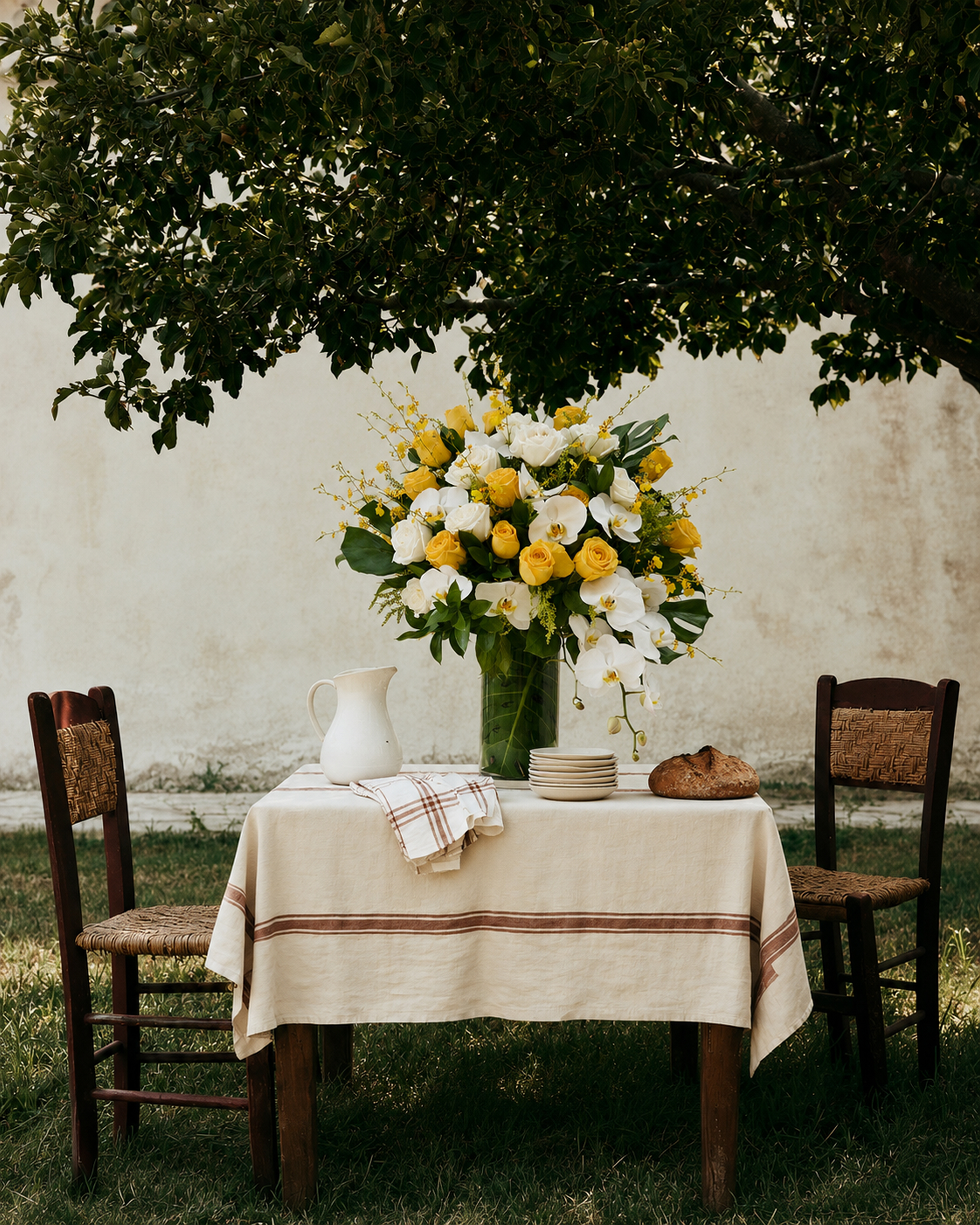
For decades, the floral industry ran on a predictable playbook: standardized arrangements, mass-market sourcing, and a business model built more around convenience than craftsmanship. Today, consumers are trading generic, mass-produced goods for products that feel personal, rare, and expertly hand-crafted. Industry watchers call it the “Niche Riche” boom, a definitive shift toward specialized, design-driven purchases over one-size-fits-all convenience.
French Florist stands out not as a reaction to that shift, but as its architect. A premium floral atelier with more than 45 years of design heritage, French Florist has honed an approach that looks nothing like the traditional shop on the corner. Now, that ecosystem is expanding as a franchise opportunity, and sophisticated multi-unit operators are taking notice.
A Category Ready for Disruption
Floral has long been one of the most fragmented retail categories in the country. Most flower purchases are highly transactional, a last-minute grab from a grocery store or a blind order from a third-party wire service. Quality is inconsistent, and craft is an afterthought.
French Florist was built in direct opposition to that model. Every arrangement is treated as a living work of art, built using thoughtfully selected, premium blooms rather than whatever is cheapest that week. Buyers who once settled for convenience are now actively seeking out, and paying a premium for, arrangements that feel curated and intentional.
“For too long, the floral industry has operated without the systems to honor the craft properly,” said Michael Jacobson, CEO of French Florist. “We built the infrastructure behind the scenes, supply chain, marketing, and technology, so floral boutiques can thrive without compromising artistry. Now we’re partnering with operators who believe flowers deserve the same operational standard as any luxury category.”
Scaling Specialization Without Compromise
The challenge with any design-driven concept is scale. French Florist’s answer is a technology-enabled operating system built underneath the artistry.
Approximately 95% of orders are placed online and routed through proprietary software directly to the nearest French Florist boutique, eliminating the third-party middlemen that have historically eroded florist margins. The physical boutique serves not just as a retail storefront, but as a high-end production hub and experiential anchor for high-ticket corporate and event clients. While designers handle the creative work by hand, the proprietary recipes, centralized marketing, and automated order management allow operators to run a highly optimized, technology-leveraged operation without sacrificing artisanal quality.
That structure translates into real performance. The company’s three corporate flagship locations generate revenue multiple times that of a traditional florist, fueling a massive wave of franchise development. In 2025 alone, French Florist awarded 45 territories, positioning it among the fastest-emerging brands in the space.
The Recurring Revenue Engine
For prospective franchisees, French Florist’s appeal goes far beyond aesthetics; it is the financial architecture. Unlike traditional florists that rely strictly on transactional holidays, French Florist equips its owners with a predictable Annual Recurring Revenue (ARR) engine.
Through structured B2B subscription models for luxury hotels and corporate offices, corporate gifting programs, and a strategic client retention platform, franchisees are handed a playbook designed to secure reliable, year-round cash flow. The centralized marketing engine keeps lead flow consistent, while ongoing coaching and streamlined supplier relationships support both single-unit owners and multi-unit developers.
A Brand Built for the Long Boom
Backed by more than 9,000 five-star customer reviews and 45 years of design expertise, French Florist is proving that specialization and scale are not mutually exclusive. It is a model built not for a momentary trend, but for long-term enterprise value, proof that uncompromising craftsmanship and scalable growth can thrive together.