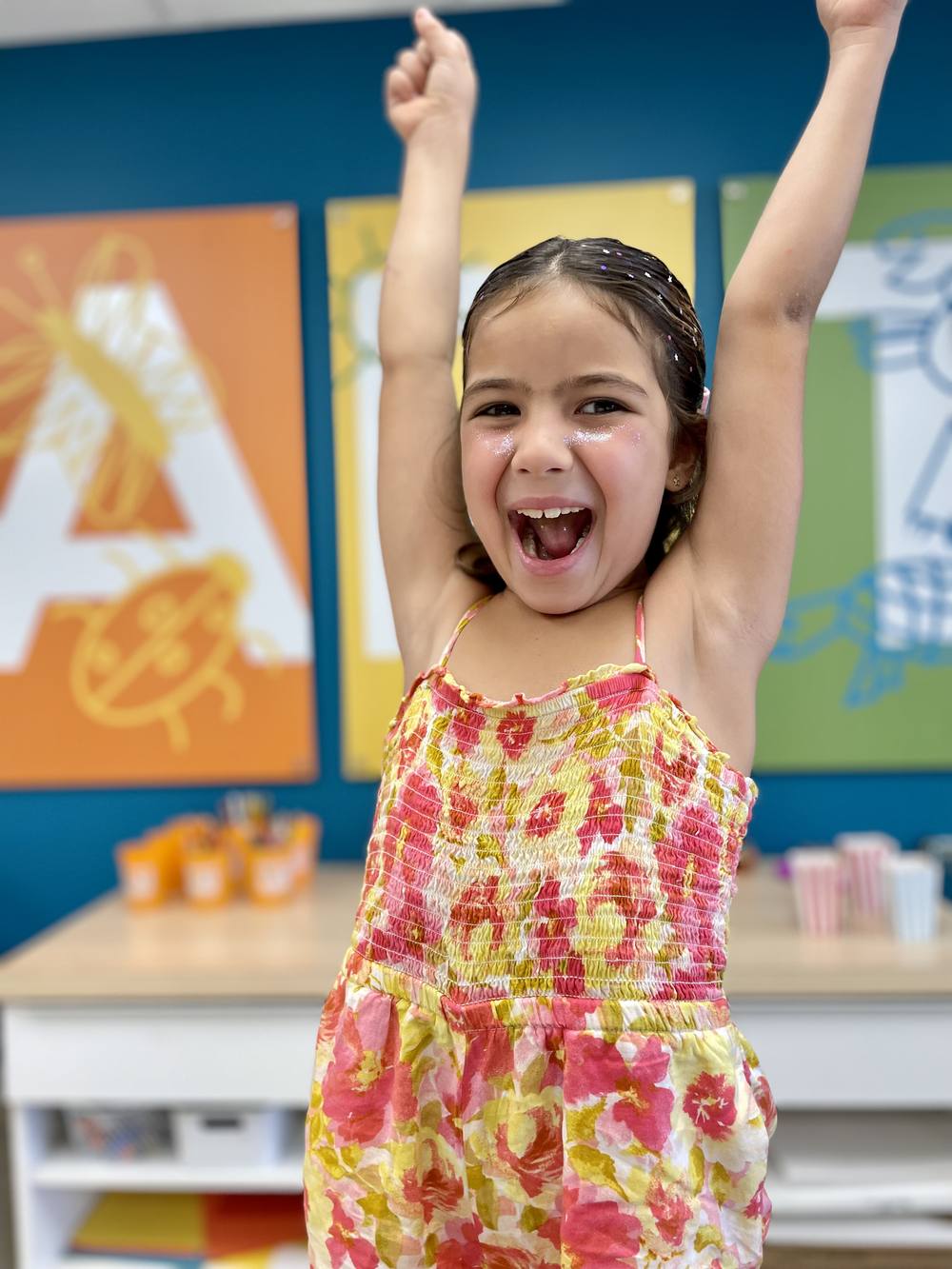
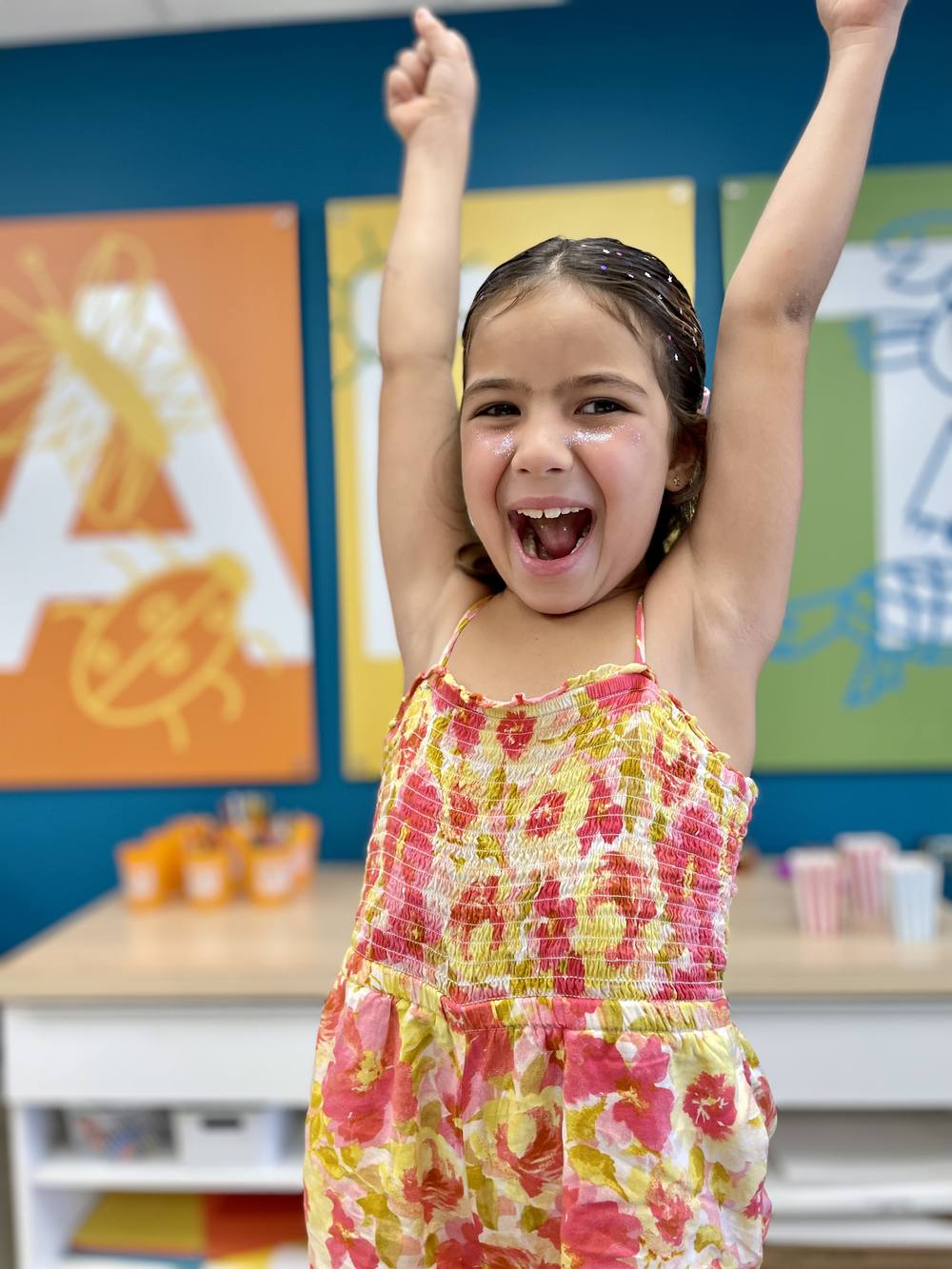
The next generation will inherit problems no one has solved yet. Teaching them to follow instructions will never be enough; we have to help them imagine what does not exist, work through the frustration of creating it, and develop the confidence to make it real.
Put a brush in a child’s hand and a blank canvas in front of them, and something important happens before the first mark is made: they have to decide where to begin. They choose a color, or make a line, or discover that the paint does not move the way they expected, and then they make another choice, and another after that.
More importantly, the child never has to stop and ask whether there is only one correct answer, which is the real value of art. Kids spend much of their lives learning to meet an established standard, and those skills matter, but a world that rewards original thinking asks more.
Kidcreate Studio exists to protect that experience. Our studios are built for children ages two to twelve: bright rooms filled with real brushes, real clay, and aprons that never come completely clean. Across more than 30 locations in 13 states, children take weekly classes, camps, workshops, parties, and mobile art programs. We have recently launched our most ambitious goal to date: introduce one million children to art by 2030. Creativity is not a nice-to-have for children who live near the right school. It is a necessity for every child.
Creativity Starts in the Hands
Creativity is physical long before it becomes intellectual. It starts in the hand, in the grip on a brush and the uneven line that has to become part of the picture, and grows through the thousands of small adjustments a child makes while creating imperfectly, long before they learn to create well.
Every creative discipline has a name for this process: the first draft. It is rarely beautiful, but it is where the real development occurs, teaching children that worthwhile things require revision, that mistakes become part of the solution, and that frustration is no reason to stop.
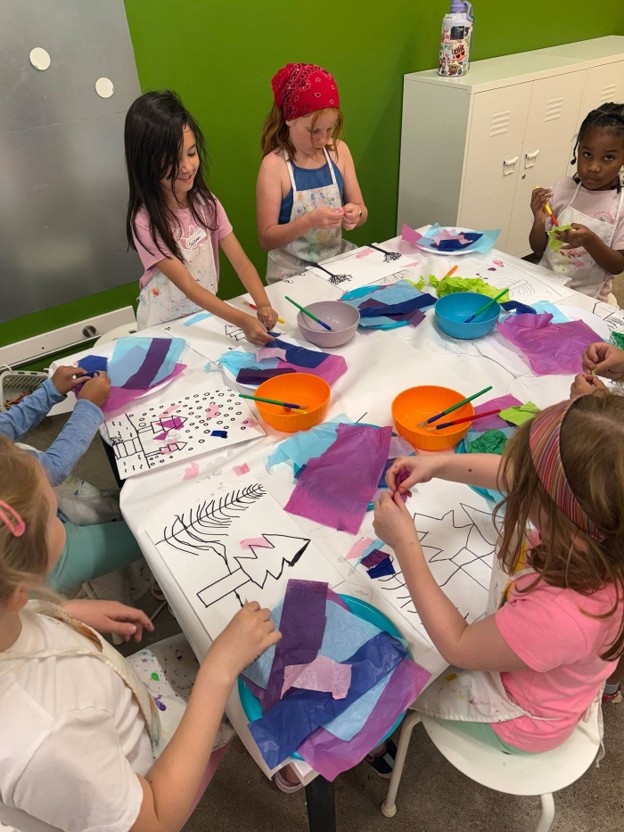
As a Kidcreate franchise owner, this is what your day could look like.
That experience is becoming easier to avoid. Much of what a child might once have made by hand can now be generated for them in seconds, without the slow, uncomfortable work of building it from scratch. The question is not whether technology is good or bad, but what happens if the struggle to create becomes optional, because a child who never confronts the blank canvas never develops the muscle that confronting it builds.
Inside the Studio
Walk into a Kidcreate studio during a class and what you notice first is how much of it happens with hands. Paint gets onto clothes and stays there, clay refuses to behave the way anyone expected, and children carry their work from an idea to whatever it becomes, selecting a color and living with it, adapting when something goes wrong, and deciding when they are done. There are no screens in the room, though that has always felt less like a policy than a consequence of everything else filling the space.
An hour of art may be the only part of a child’s day in which nothing is optimized, scored, or instantly undone. Parents may believe they are shopping for an after-school activity, but what they are really searching for is a place where their child becomes a more creative and confident version of themselves — a Kidcreate Kid.
How You Reach One Million Children
A neighborhood studio becomes an important part of the community around it, drawing families back week after week for classes, filling the gaps school calendars leave open with camps, and introducing children to art through birthday parties that feel like celebrations rather than lessons. Over time those experiences reach thousands of children, which is meaningful by any measure and nowhere near a million.
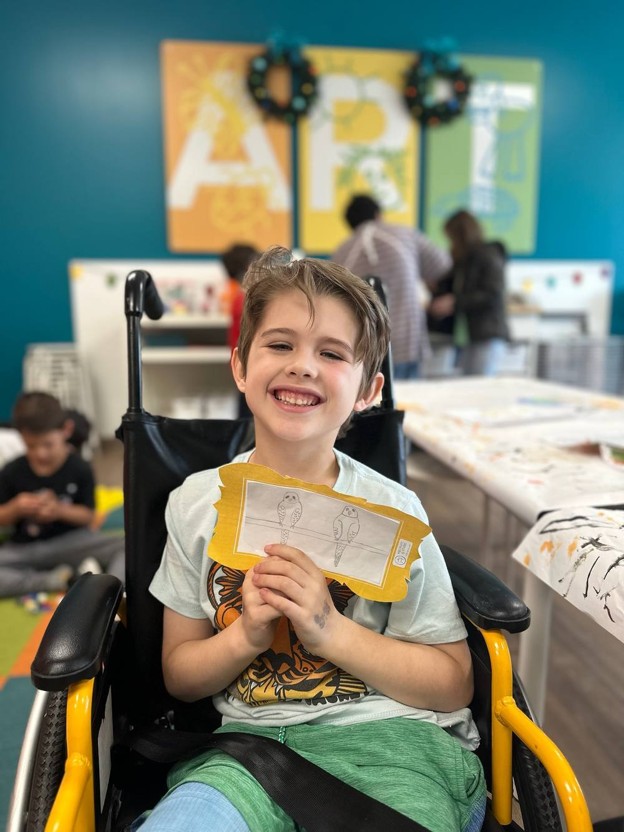
The moment a child realizes they are a Kidcreate Kid.
Kidcreate On-The-Go takes the studio experience into schools, libraries, community centers, childcare facilities, and local events, serving children who may never otherwise walk through the front door. The studio is the anchor and the mobile program is the reach, which matters because access to art still depends heavily on where a child happens to live.
More Than an Art Studio
“The model is designed so an owner can make a meaningful impact on their community, inside the studio and well beyond it. We will not reach one million children one studio at a time, which is why we put studios on wheels and give owners the ability to serve entire communities.”
Lara Olson, Founder, Kidcreate Studio
Kidcreate owners are not simply buying the right to run children’s art classes. They are building a community-based enrichment business with complementary revenue streams that include classes, camps, workshops, parties, mobile programs, and retail across different days and seasons. The curriculum is created and supported centrally, so an owner’s time stays on the business, the team, and relationships with schools and community partners.
The people who do best here are almost never the ones shopping for a franchise category. Many first experience Kidcreate through their own child, see what happens during that hour, and keep thinking about it afterward, and that connection gives an owner the conviction to get through a first year.
.png)
The Next Studio
More than 30 locations are a meaningful start toward one million children, and nowhere near the finish. Our next stage of growth focuses on markets where families are already searching for stronger creative experiences and do not have enough places to find them: Texas, California, the Carolinas, Florida, and the tri-state area.
The studios are worth seeing in person, if only because the paint never quite photographs correctly, and anyone thinking about what Kidcreate could mean for their community can begin the conversation at franchise.kidcreatestudio.com. The next studio will likely be opened by someone who was not looking for a franchise at all, but for a business they could believe in.