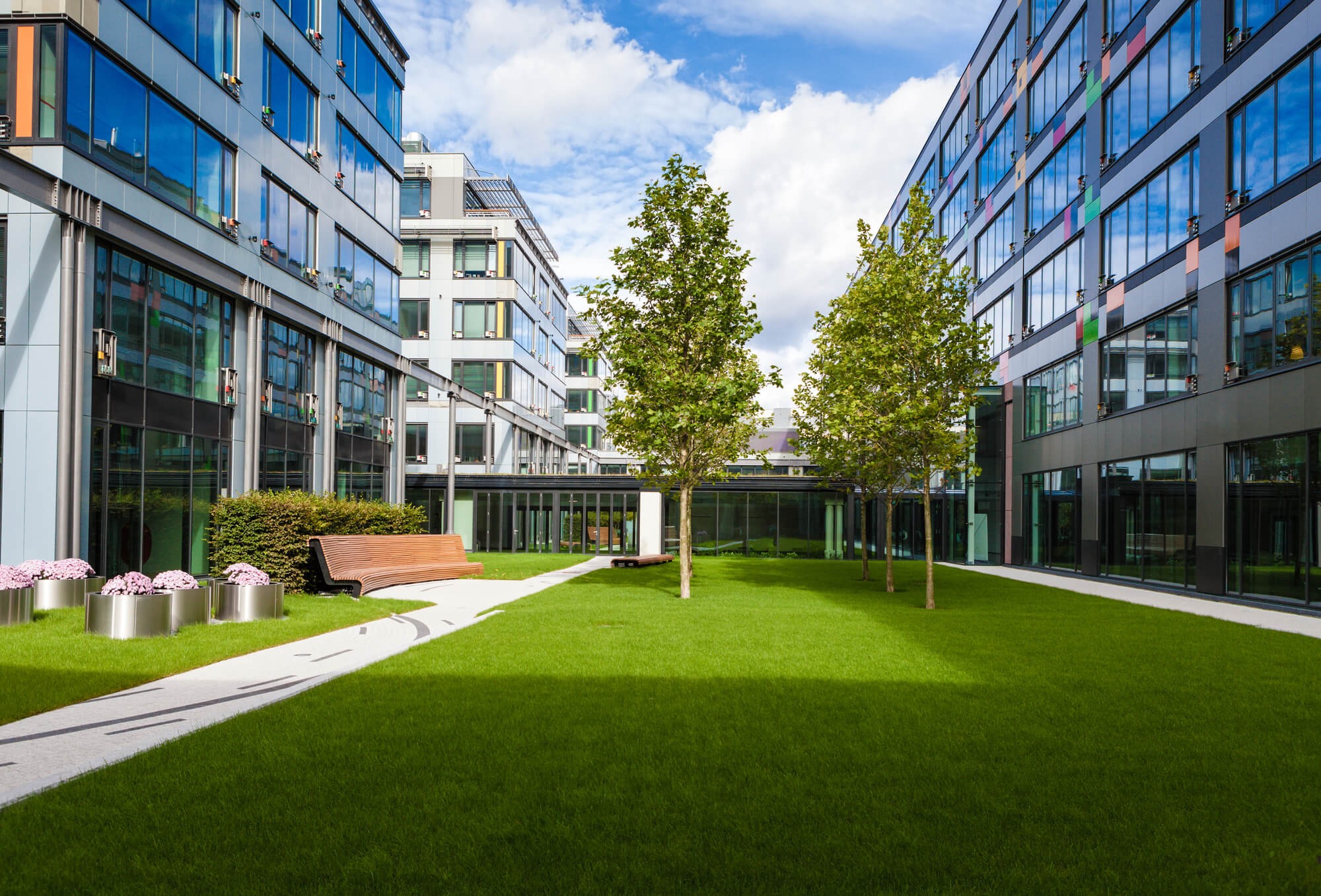
For many commercial property owners, landscaping has traditionally been viewed as a routine maintenance expense. However, as property managers face increasing pressure to maintain asset value, enhance tenant experiences and navigate weather-related challenges, landscaping is quickly becoming a strategic component of property management. Most people don't notice commercial landscaping when it's exceptional and uniform, but they notice immediately when it's neglected. The landscape is often overlooked, even though it forms one of the largest parts of a property's first impression.
The condition of a property's exterior often creates the first impression for customers, tenants, employees and investors. A well-maintained property communicates professionalism, attention to detail and strong management. On the other hand, neglected landscaping can negatively impact perceptions before anyone walks through the front door. In fact, it’s estimated it takes only 7-10 seconds to form an opinion about the property in front of you.
But curb appeal is only part of the story.
ManageMowed works exclusively with commercial properties, overseeing a network of vetted local vendors while providing clients with dedicated account management. This approach allows property managers to maintain consistent standards across locations without taking on the administrative burden of managing multiple landscaping providers.
Landscaping's Role in Property Performance and Management
Today's commercial landscapes play a critical role in supporting safety, compliance and long-term property performance. Maintaining visibility around entrances, reducing trip hazards, managing drainage systems and monitoring site conditions all contribute to a property's operational success. For businesses and property owners, landscaping is increasingly tied to both risk management and asset protection.
While exact universal figures for fine-prevention savings are rare, industry data shows that 25% to 56% of property operators face legal disputes or cite regulatory compliance as their primary operational challenge. Professional commercial landscape management mitigates these multi-thousand-dollar exposures by enforcing strict adherence to building, safety, environmental and zoning codes.
The impact becomes even more significant in regions that experience challenging weather conditions. In areas like the Pacific Northwest, frequent rainfall can create persistent issues for commercial properties. Standing water, soil erosion, clogged drainage systems and overgrown vegetation can quickly escalate into costly maintenance concerns if left unaddressed. What starts as a minor problem can often become a larger operational issue that affects both property appearance and functionality.
Beyond maintenance and compliance, commercial landscaping increasingly serves as a reflection of a property's overall management and operational standards. Well-maintained grounds create a welcoming environment for tenants, employees and customers while signaling that a property is cared for and professionally managed. In competitive commercial real estate markets, landscaping can influence tenant retention, customer perception and even leasing activity, making it a valuable tool for enhancing both property performance and long-term asset value.
The Rise of Managed Landscape Services
Many property managers are shifting away from reactive maintenance and embracing a more preventative approach. Regular inspections, ongoing communication and consistent oversight help identify potential concerns before they require expensive repairs or disrupt daily operations. The challenge is not simply finding a company to mow grass or maintain shrubs, but creating a system that delivers accountability, visibility and consistency across every property.
Despite generating more than $180 billion annually, the highly fragmented U.S. landscaping industry is made up of nearly 700,000 independent operators, leaving many commercial property owners to manage multiple vendors, inconsistent service standards and limited accountability.
That need for greater oversight has fueled the growth of managed landscape service models. Rather than coordinating numerous contractors independently, property owners are increasingly seeking partners that provide centralized management, quality control and a single point of contact.
Creating Value Beyond Maintenance
As the property management industry continues to expand, demand is rising for services that help protect and enhance commercial assets. With larger portfolios and more geographically dispersed properties to oversee, property managers are increasingly prioritizing partners that can deliver consistency, accountability and operational efficiency. Commercial landscaping has become a key part of that equation, influencing curb appeal, tenant satisfaction, safety and overall property value.
By simplifying vendor coordination and maintaining consistent standards across multiple locations, ManageMowed helps property owners protect their investments, strengthen first impressions and reduce the administrative burden associated with landscape maintenance. In today's competitive commercial real estate environment, landscape management is no longer simply a maintenance function. It has become an essential strategy for preserving asset value, reducing risk and supporting long-term business success.