

Over the last several years, the restaurant industry has been forced to navigate rapid change, including labor shortages, inflation pressure and evolving consumer expectations for value, speed and, increasingly, quality. Even so, some emerging brands are proving that successful growth is still possible by leaning on discipline and strategy. These examples offer practical lessons for franchisors looking to scale responsibly through 2026 and beyond.
One clear trend is sharper category focus. Restaurant brands can’t be everything to everyone, and the ones that try to often struggle. Many brands are simplifying their menus and doubling down on their strongest sellers. The tighter focus makes operations easier to run and helps keep the guest experience consistent from market to market. The power of this approach is becoming increasingly clear in the fast-casual chicken space, which continues to outperform broader quick-service and fast-casual restaurant trends despite competition.
Chicken concepts generally benefit from supply chain stability and mass appeal, but the brands that see stronger growth are doing more than riding category momentum. Brands that build systems with replication in mind are the ones making real gains.
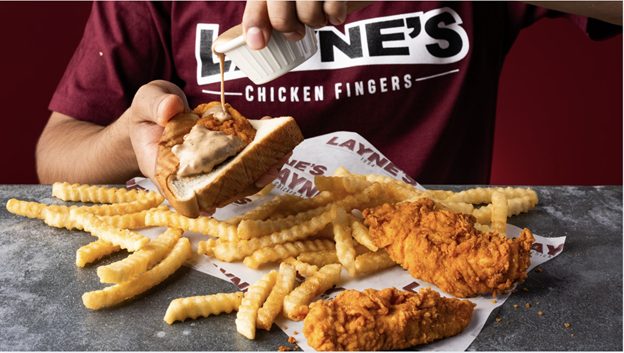
Layne’s Chicken Fingers is a current example of how a focused concept with operational discipline can accelerate expansion without sacrificing quality or guest experience. The brand closed out 2025 having doubled its restaurant count, achieved record systemwide sales growth and earned recognition from several industry publications focused on emerging restaurant performance.
While the numbers and awards paint a strong picture, Layne’s underlying drivers of growth can be applied across the restaurant franchise space at large.
Growth Measures Reach Beyond Unit Count Alone
Many franchisors look to the total number of units sold as an indicator of success. That approach is becoming hard to sustain, especially as franchisee expectations evolve. Modern franchisees are looking for more sophisticated systems and long-term scalability, and brands have to deliver on both.
In 2025, Layne’s expanded its restaurant footprint while adding headcount at the home office. The takeaway is simple: Support has to scale as fast as the unit count. Brands that do not invest early in operations, training, marketing and even culture risk overextending themselves, while franchisors that prioritize internal growth are better equipped to support franchisees through new market entry, labor challenges and competitive pressure.
Multi-Unit Franchisees Are Voting With Their Capital
Another notable shift is who is driving expansion. Growth is fueled increasingly by experienced multi-unit franchisees. These entrepreneurs may already operate established national brands. They have the experience necessary to drive success, and they come to the table with clear expectations for franchisor systems and support. When they choose to invest in a given brand, they’re signaling confidence in both the business model and the franchisor’s leadership and execution.
Layne’s recent growth has included agreements signed with operators from multiple national and legacy restaurant brands. In addition to the vote of confidence, this signals a broader shift in the industry. As legacy brands saturate markets nationwide, seasoned franchisees are gravitating toward emerging brands that offer growth potential, strong unit economics and a collaborative franchisee-franchisor relationship.
For franchisors, attracting experienced operators requires more than strong sales numbers. It demands transparency, realistic growth planning and a support model that respects franchisees as long-term partners rather than short-term revenue drivers.
Culture Is Becoming a Competitive Advantage
As franchisees become more discerning with their investments, the organizational culture has become a key differentiator. Brands that articulate clear values and back them up in practice tend to align better with franchisees, retain team members and deliver a more consistent experience across markets.
Layne’s has remained committed to this, keeping culture central as it grows. Recently, it has even expanded its leadership team with roles dedicated to operational support and company culture. This reflects a broader recognition of the fact that culture isn’t created or developed automatically. It must be built and reinforced across all levels.
For franchisors eyeing national expansion, culture can no longer be treated as an afterthought. It influences everything from franchisee onboarding to guest experience, and it becomes increasingly important as systems grow beyond their regional roots.
Strategic Growth Beats Aggressive Growth
As Layne’s has grown, it has demonstrated just how powerful measured, strategic expansion is. Rather than onboarding every potential franchisee for the sake of dropping pins in new markets, successful franchisors are prioritizing market selection, franchisee alignment and the long-term health of the system.
As the industry enters 2026, the brands most likely to thrive will be those that treat growth as a byproduct of doing the fundamentals well. That means delivering a compelling product, supporting franchisees effectively and building organizations capable of sustaining scale.
Layne’s recent run shows what this looks like when it’s done well. The brand has big long-term goals, but the more useful takeaway for other franchisors is simpler: growth holds up better when it’s deliberate, not just fast.