


For more than 30 years, I’ve watched people enter franchising for the first time.
Corporate executives.
Military veterans.
Sales leaders.
Operators looking for the next chapter of their careers.
Almost all of them begin the process by asking the same question.
It sounds logical.
It sounds responsible.
It sounds like the right place to start.
But in my experience, it is the wrong question.
The question most people ask when evaluating a franchise is:
“How much money can I make?”
It’s understandable.
But it reveals a deeper misunderstanding about how franchising actually works.
Because the most successful franchise owners don’t begin with income.
They begin with structure.
That observation led me to what I call Knauf’s First Law of Franchising.
Knauf’s First Law of Franchising
The structure of the franchise system matters more than the income potential of the individual unit.
Most buyers reverse those priorities.
They look at Item 19 earnings claims.
They ask about average owner income.
They search for the highest potential return.
But those numbers rarely tell the full story.
What truly determines long-term success in franchising is not the theoretical income of one location.
It is the design of the system itself.
What 30 Years in Franchising Teaches You
When you’ve spent three decades inside franchising, you start to see patterns.
I began my career in the industry as a young operator working inside a franchise system. Over the years I worked my way through nearly every role franchising offers — operator, franchise owner, regional manager, consultant, and advisor to thousands of prospective buyers.
Across that time, I’ve seen people build extraordinary wealth through franchising.
I’ve also seen capable, hardworking people struggle.
And the difference almost never comes down to intelligence, effort, or even work ethic.
The difference almost always comes down to the system they chose.
Some franchise systems are built in a way that allows owners to scale, add units, develop leadership teams, and grow enterprise value.
Others are built primarily to support single-unit operators.
Both models can work.
But they lead to very different long-term outcomes.
Understanding that difference is one of the most important insights a new franchise owner can develop.
The Systems That Can Create Wealth
The franchise brands that create extraordinary outcomes share certain characteristics.
They are structured to allow operators to scale.
They support:
- Multi-unit ownership
• Market density
• Operational leverage
• Strong unit economics
• Leadership infrastructure
These systems allow owners to move from operating a single location…
to building something far more powerful.
A franchise enterprise.
And that distinction — between owning a location and building an enterprise — is becoming increasingly important in modern franchising.
The Trap of the “Income Opportunity”
Some franchise concepts look fantastic on paper.
They advertise high potential income for a single location.
They show attractive unit-level economics.
They promise quick break-even timelines.
But they lack the infrastructure needed for real scale.
These businesses may create strong operators.
But they rarely create enterprise value.
And in today’s franchising environment, that distinction matters more than ever.
Because the biggest financial outcomes in franchising increasingly come from building multi-unit platforms, not simply operating individual locations.
The Quiet Transformation of the Industry
Over the past decade, something profound has been happening inside franchising.
Private equity firms have begun acquiring large multi-unit franchise groups at increasingly strong valuations.
These acquisitions have revealed a powerful truth.
The real financial upside in franchising often comes not from operating a single successful location…
…but from building a structured group of locations designed for scale.
Groups with:
- Professional leadership teams
• Operational systems
• Market density
• Predictable performance
In other words, the value is not just in operating the system.
It is in owning the platform.
This shift is quietly redefining what success looks like in franchising.
From Operator to Architect
Because of these changes, a new mindset is emerging among the most sophisticated franchise owners.
They are no longer simply operators.
They are becoming architects.
Instead of evaluating a franchise as a single business, they evaluate it as the foundation of a future enterprise.
They think about questions like:
- Can this system support multiple units in one market?
• Is there territory density available?
• Can this business support leadership beyond the owner?
• Does the model scale operationally?
• Can this eventually become a platform business?
These are not beginner questions.
They are enterprise questions.
And they represent a new way of thinking about franchise ownership.
Why This Matters for New Buyers
Franchising remains one of the most accessible pathways into business ownership.
But the buyers entering the industry today have an opportunity that didn’t exist 20 years ago.
They can design their ownership path intentionally.
Instead of asking:
“How much can this location make?”
They can ask:
- Can this brand support multiple units?
• Is there territory density available?
• Can this business support leadership beyond the owner?
• Does the model scale operationally?
These are the questions that determine whether someone is buying a job…
or building something far more valuable.
The Beginning of a Bigger Conversation
Franchising is evolving.
New capital is entering the industry.
Private equity is reshaping exit opportunities.
And more sophisticated operators are beginning to approach franchise ownership differently.
Over the years, I’ve come to believe that franchising follows a set of underlying strategic principles.
Principles that determine whether an owner simply operates a location…
or builds a scalable enterprise.
The first of those principles is simple.
Structure comes before income.
When buyers understand that idea, the entire franchise evaluation process changes.
And in many cases, so does the outcome.
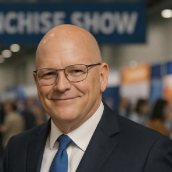
George Knauf is a trusted franchise advisor with over 20 years of experience helping individuals and companies—from startups to public brands—build success through franchising. He founded OrcaZee.com (Orca Franchising ), a program for elite franchise owners seeking to build portfolios and exit to private equity. MyPerfectFranchise.com, a free service, to guide aspiring owners toward the right opportunities and provided the deep knowledgebase behind AskFranchiseGPT.com, the #1 AI tool for franchise discovery and growth.