


By George Knauf, Franchise Investment Strategist | MyPerfectFranchise.com | Founder, Orca Franchising
I’ve been in franchising for thirty years. I’ve sat across from thousands of people making one of the biggest financial decisions of their lives. And in all that time, one conversation has been almost completely absent from the franchisee side of the table.
The conversation about who actually gets rich in franchising — and why it isn’t usually the franchisee.
Franchisees exit at three to six times EBITDA. Franchisors exit at fifteen to twenty-five times. Same industry. Same brands. Sometimes the same addresses. A fraction of the valuation. Not because franchisees build worse businesses. Because they build different structures. And until recently, nobody was telling them that.
That’s starting to change.
The Old Programs Did What They Were Designed to Do
Master franchises and regional developer programs have been around for decades. They work. They created real wealth for operators who understood what they were buying: a slice of the franchisor’s economics. Royalty participation. Franchise fee splits. Territory ownership. Not just operational plays — structural plays.
But those programs were designed to serve the franchisor’s growth needs. You were useful because you could recruit and support franchisees in a geography the franchisor couldn’t cost-effectively reach. When your interests and the franchisor’s aligned, both parties prospered. When they didn’t, you learned who the program was actually designed to serve.
And not every RD program is what it appears to be. Some franchisors offering these arrangements are cash-strapped emerging brands using RD fees to fund operations. They need the liquidity. Others need a low-cost sales force they don’t have to put on payroll. The territory rights are real. The alignment is not. You’re not a strategic partner in those arrangements — you’re a solution to their problem. Knowing the difference before you write the check is the entire game.
The new programs are being built differently. If you don’t understand the difference, you’ll mistake one for the other.
What the New Model Actually Is
The programs emerging now aren’t about geographic rights or recruiting commissions. They’re about giving business leaders, franchise operators, and sophisticated investors a seat at the franchisor’s economic table — without asking them to run operations they don’t want to run.
Franchise fee participation. Recurring top-line revenue participation. A structured exit path at multiples that reflect the franchisor tier, not the franchisee tier. You’re not building locations. You’re building position in a system. The value compounds differently. The exit trades differently.
The franchisors inviting people into these arrangements are not looking for passive check-writers. They’re looking for operators with real credentials. People who understand how franchisees actually think. Who can coach them through hard decisions — not just read a KPI dashboard and send a report.
Most of the people being deployed in support roles today don’t clear that bar.
The Talent Problem Nobody Wants to Say Out Loud
The coaching talent being deployed inside many of these programs is not calibrated to the stakes involved. Someone who just finished an MBA, who has never owned a business, who has never talked a franchisee through an acquisition decision or a PE exit conversation — that person is being positioned as the guide for franchisees trying to build something worth $10 million or $20 million or more.
It doesn’t work. Intelligence and credential don’t equal earned pattern recognition. And pattern recognition is what franchisees actually need when they’re deciding whether to add a second brand, restructure their management team, or begin building toward an institutional exit.
The people in these roles need to operate at a near-CEO level. They need to have built something. Lost something. Recovered from something. The new programs that actually move the multiple needle will figure this out. They’ll stop staffing support functions with junior talent and start recruiting from the operator community. People who’ve lived it.
Why the Exit Multiple Is the Only Metric That Matters
In The Last Employee: The Rise of Ownership, I make an argument I’ve been making in private conversations for years: the franchise industry has done an extraordinary job helping people get into business and a mediocre job helping them get out at maximum value.
The entry transaction gets all the attention. The exit — where wealth is actually realized — gets almost none until it’s too late to build toward it.
Businesses that exit at premium multiples share specific characteristics. Not owner-dependent. Documented, transferable systems. Financial reporting structures institutional buyers can underwrite. Management depth that survives a change of ownership. A portfolio thesis that makes sense to a buyer reviewing hundreds of deals.
These are not accidents. They are built, deliberately, years before the exit conversation begins.
That is exactly what Orca Franchising is designed to support — giving franchise portfolio builders at Levels 4 and 5 of Knauf’s Hierarchy of Franchising™ the strategic infrastructure that has always been available to franchisors and almost never available to franchisees. Portfolio architecture. Operational transformation. Exit engineering. Access to the cash flow structures that historically only existed at the top of the system.
The goal isn’t to help you sell your business. It’s to help you build a Franchise Portfolio Enterprise that commands the multiple it deserves.
Beat Them to the Punch
Private equity isn’t waiting for franchisees to figure this out. Roll-up activity in home services, commercial services, and multi-brand portfolios is accelerating. The buyers are getting more sophisticated. The bar for a premium-multiple exit is going up, not down.
The franchisees who exit at the top of the range in the next decade are already building differently. Not because they’re smarter than everyone else. Because someone sat across from them — someone with the real-world credential to earn the seat — and told them the truth about how the exit actually works.
That conversation is available.
Most franchisees just don’t know to ask for it.
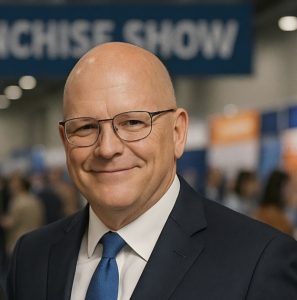
George Knauf is a Franchise Investment Strategist with thirty years in franchising and twenty-two years as a buyer-side franchise consultant. He is the creator of Knauf’s Hierarchy of Franchising, founder of MyPerfectFranchise.com and Orca Franchising, and author of The Last Employee: The Rise of Ownership (MyPerfectFranchise Publishing, 2026). He was the keynote speaker at the inaugural IFA World Franchise Show and is an expert columnist for Franchising Magazine USA.