

The Confidence Cost of Delay
It was a normal mid-spring storm afternoon. Our department had already been dispatched to multiple “wires down” calls when the dispatcher came back on the radio: “Structure fire: house filling with smoke after a lightning strike.”
When I arrived, I walked the perimeter to size up the situation. At the back of the house, fire was pushing out of an attic vent. Engine 94 pulled in behind me. I told the first crew to pull a large line to the rear and knock the fire down from the outside before sending anyone inside or onto the roof.
That decision wasn’t perfect. It was decisive.
By the time the final hose was loaded back onto the engine, the house was damaged but still standing.
On an emergency scene, hesitation creates more risk than imperfect action. Crews don’t lose confidence because a decision isn’t flawless. They lose confidence when no one decides.
In business, the same dynamic plays out quietly. Momentum doesn’t collapse all at once. It leaks when leaders wait for agreement instead of owning the call.
Reframing the Pattern | Permission vs. Ownership
Most leaders don’t start indecisively. They were trained for alignment, approval, and caution earlier in their careers. Those habits work inside established systems, until responsibility shifts.
The employee reflex is to ask before acting.
The owner reflex is to research options, decide, then inform.
The CEO rule is simpler and heavier: delayed decisions cost trust, profits, and confidence.
This is responsibility showing up visibly, not ego.
Why Employees Ask First
Employees are rewarded for alignment. Approval reduces personal risk. Clarity comes from above. Inside a well-designed system, that structure works.
Inside leadership roles, it slows everything down.
A McKinsey Global Institute study found that executives spend up to 70% of their time in meetings and decision-related activities, yet many organizations still struggle with slow execution because decision rights are unclear or deferred (McKinsey Global Institute, The Case for Faster Decisions).
That reflex doesn’t disappear when someone becomes a franchise owner or franchisor. It follows them into a role where it no longer fits.
The Ownership Shift First-Time Franchisors Miss
When leaders move into franchising, decision rights change before habits do.
Many first-time franchisors hesitate to say “no” to their first few franchise partners. They delay enforcing standards. They soften expectations. They postpone uncomfortable calls, not because they’re unsure, but because they don’t want to damage early relationships.
Early franchisors don’t hesitate because they lack confidence. They hesitate because they don’t want to damage trust with their first franchise partners.
The result, however, is the opposite of what they intend.
Teams don’t need certainty. They need direction.
Research published in Harvard Business Review shows that organizations with faster decision cycles outperform peers on growth and profitability, not because they avoid mistakes, but because they correct them sooner (HBR, Decision-Making at the Speed of Execution).
Hesitation isn’t neutral. It’s interpreted.
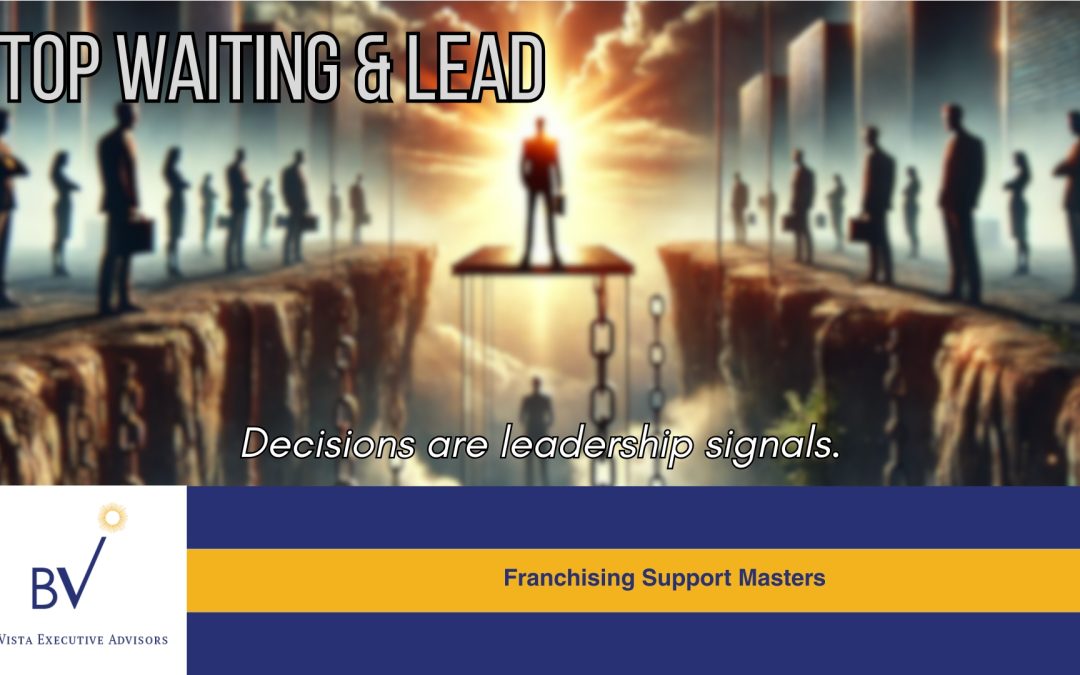
CEO Lens | Decisions Are Signals
Every decision sends a message about who and what matters, who owns what, and how safe it is to act.
Slow decisions communicate doubt.
Over-consensus communicates insecurity.
Clear decisions build confidence, even when they’re adjusted later.
One of my senior engineering professors, Dr. Thorpe, once told me, “If your original design isn’t cringe-worthy a year from now, you waited too long.”
That mindset scales. Perfection doesn’t.
Decisive doesn’t mean unresearched, undocumented, or impulsive. It means owned, communicated, and revisited.
Why Consensus Feels Safer (But Isn’t)
Consensus spreads responsibility. Ownership concentrates it.
Leaders delay decisions for predictable reasons: fear of being wrong, fear of conflict, fear of disappointing someone. Many justify avoidance as “being thoughtful.”
Teams experience it as hesitation.
Bain & Company research shows that organizations that clarify decision ownership and move faster are more than twice as likely to outperform competitors financially (Bain & Company, Decide & Deliver).
Speed with ownership compounds clarity. Delay compounds confusion.
The Hidden Cost of Waiting
When decisions stall, teams hesitate, execution fragments, and confidence erodes.
People stop asking what to do and start waiting or worse, making their own way.
Leadership feels heavier, not because the team is incapable, but rather because leadership isn’t tangible.
Simple Awareness Exercise | Decision Audit
This week, increase your self-awareness by noticing:
- Where you’re waiting for agreement.
- Which decisions only you can make.
- Where input has become a delay mechanism.
Write down one decision you’ve been circling. Not delegating. Not discussing. Just turning over in your head.
That’s your leverage point.
Action Step | Decide Without Consensus
Make one low-risk decision this week without seeking consensus.
Then:
- Inform clearly.
- Invite feedback after.
- Adjust if needed.
Ownership first. Refinement second.
That’s leadership.
Normalizing the Discomfort
Deciding faster will feel uncomfortable at first. Discomfort builds muscle. That’s the cost of ownership.
You’re not being reckless. You’re becoming reliable.
#LeadershipDevelopment #DecisionMaking #CEOGrowth #FranchiseOwner #FranchiseLeadership #OrganizationalDesign #PredictableScale #94XMovement
Lucas Frey: Franchise Leadership Expert and Author
Lucas Frey is a seasoned franchise strategist with over two decades of experience in leadership and business development. His journey from the front lines as a fire chief to the helm of his own successful franchise has equipped him with unique insights into the challenges and triumphs of franchise ownership. As the author of Your Guide to 90-Day Success: The Franchisee’s Strategy for Early Wins, Lucas empowers franchisees to achieve early wins and sustainable growth by shortening the steep learning curve of business ownership.
Passionate about helping others succeed, Lucas offers actionable strategies that blend practical business acumen with a deep understanding of human dynamics. Through his work, he’s committed to shaping the future of franchising, one successful business at a time.