


Level 3 is not a destination. It is the job you bought twice — unless you do the work that turns an owner-operator into an owner-executive.
BY GEORGE KNAUF | EXPERT COLUMN
Last month I introduced Knauf’s Hierarchy of Franchising — six levels from Employee to Legacy Owner. This month I want to take you to the level where most franchisees stop. Not because they fail. Because nobody told them there was another level to climb.
Level 3 is the Multi-Unit Operator. It is also the line where a franchisee becomes a franchise investor. Cross it, and you are building an asset. Stay short of it, and you have purchased yourself a very expensive job.
What Level 3 actually is
A Multi-Unit Operator owns more than one location within a brand. That is the surface definition. The real one is harder.
A Multi-Unit Operator has made the identity shift from owner-operator to owner-executive. They are no longer essential to the daily operation of any single unit. They have built a management layer that runs the business better than they did. They read multi-unit P&Ls. They set compensation structures. They hire managers who hire managers. The business no longer requires their hands. It requires their head.
That shift is harder than the shift from employee to owner. The first required courage. This one requires identity.
Level 2 made you an owner. Level 3 requires you to stop being the operator.
Why most franchisees never make it
Three reasons, in order.
One — they built Unit 1 around themselves. Not deliberately. By default. They were the closer, the trainer, the fixer, the person who showed up at 6 a.m. when the manager called out. Every system and every customer expectation pointed back to them. That works at one unit. It cannot scale. The owner who opens Unit 2 without first removing themselves from Unit 1 ends up with two struggling units instead of one strong one.
Two — they confused profitability with stability. Unit 1 made money, so they assumed the model was proven. A profitable unit that depends on the owner is not stable. It is fragile and producing income at the same time. Before Unit 2 is signed, the systems, the training, and the financials all have to be clean enough that a buyer would find them credible. Most franchisees skip past that because the cash flow looks good. The cash flow is not the test.
Three — nobody told them there was a Level 3. The franchise sales process delivered them to Level 2 and stopped. The franchisor was thrilled to sell the first agreement. The consultant collected the commission. Validation calls celebrated the cash flow. Nobody handed them a map that went further. So they assumed they had arrived. They had not arrived. They had finished basic training.
A profitable Level 2 unit is not a destination. It is a foundation.
Why the climb is worth making
At Level 2, an exit is a small-business sale. Buyers are other operators. Multiples are modest. Three to six times EBITDA. The deal is built around what you personally produce.
At Level 3 — with multiple units, a real management layer, and institutional-grade financials — the buyer pool changes. You are now sellable to sophisticated regional operators, to family offices building franchise platforms, and at the higher end, to private equity firms running roll-up strategies. The multiple changes with the buyer. The asset changes with the multiple.
This is the difference between selling a job and selling a business. Most franchisees die at the boundary between those two outcomes because nobody warned them the boundary existed. The financial argument for the climb is not theoretical. It is the entire reason the Hierarchy exists in the first place.
The Level 3 question
There is one question I ask every candidate who tells me they are ready for a second unit. The honest answer determines whether they are about to build a multi-unit business or buy themselves a second job twice as exhausting as the first.
Can this business operate for thirty days without a single decision from you?
If the answer is no, Unit 2 is premature. Not impossible — premature. The work that needs to happen before that second agreement is signed is the work that turns an owner-operator into an owner-executive. Systems. Documentation. Manager development. P&L discipline. The boring, unglamorous work almost nobody does because the cash flow on Unit 1 is good and the franchisor is already on the phone selling territory rights.
Do that work, and Level 3 is a destination. Skip it, and Level 3 is a trap with two units in it.
Where the Hierarchy goes from here
Level 3 is not the end of the Hierarchy. It is where the climb starts to compound. Above it sits Level 4 — Multi-Brand Portfolio. Above that is Level 5, the Franchise Portfolio Enterprise, the level I named because the industry had no word for it. And above that, Level 6, the Legacy Owner.
Every level above 3 requires that the operator first become an executive. There is no shortcut.
If you are a single-unit owner reading this, the most important decision you make this year is not which brand to add. It is whether to do the work that makes you ready to add anything at all. If you are already a multi-unit operator, the harder question is whether you actually crossed the line — or whether you just opened a second location with the same owner-dependency baked into both.
You are not stuck because the market is hard. You are stuck because nobody told you the climb continued.
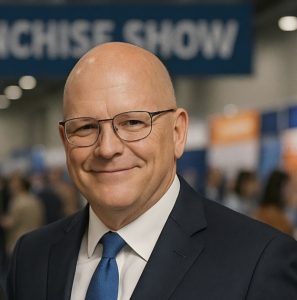
George Knauf is a Franchise Investment Strategist with thirty years in franchising and twenty-two years as a buyer-side franchise consultant. He is the creator of Knauf’s Hierarchy of Franchising, founder of MyPerfectFranchise.com and Orca Franchising, and author of The Last Employee: The Rise of Ownership (MyPerfectFranchise Publishing, 2026). He was the keynote speaker at the inaugural IFA World Franchise Show and is an expert columnist for Franchising Magazine USA.