By Solomon Gould, OD, MBA
Sr. Director, Eye Care
Pearle Vision
If I had to summarize what is changing in optical franchising this year, I’d say this: the industry is moving from a transactional, product-led model to a care-led, technology-enabled model where trust and continuity are driving growth.
I’ve worked across private practice, consulting, corporate environments, and multi-location growth models. In every setting, the same pattern keeps showing up in 2026: operators who align clinical quality, operational discipline, and patient experience are separating from the pack. At Pearle Vision, that alignment is central to how we support franchisees in a changing market.
These are the five trends I believe are reshaping optical franchising right now.
1) Private equity is changing local competition faster than many owners expected
In many markets, private equity-backed groups acquire multiple practices within a 10- to 20-mile radius and centralize major functions such as scheduling, staffing, and marketing. On the surface, patients see convenience: expanded hours, aggressive first exam promotions, and faster appointment availability because provider pools are shared.
But scale alone does not create loyalty.
What I’ve observed is that patients may try a competitor once for convenience, then return to practices where care feels consistent and personal. When provider rotation is high and communication styles vary too much across visits, the patient experience can feel fragmented. That fragmentation is an opportunity for franchise operators who execute well.
At Pearle Vision, our strongest operators are leaning into continuity as a strategic advantage: stable doctor schedules, stronger follow-up discipline, and clearer patient communication. In a consolidating market, those fundamentals matter as much as any promotional offer.
2) Personalization now depends on process, not personality
Many organizations talk about personalized care. In 2026, the winners are building systems that put personalization on repeat.
I’m seeing three operational levers matter most:
- Doctor continuity scheduling: Pairing patients with the same doctor whenever possible and using preferred provider flags in scheduling workflows.
- Standardized exam to optical handoff: Doctor-led recommendation language that bridges clinical findings to optical choices in a consistent way.
- Documented care pathways: Especially for dry eye, myopia, and medical follow-up, so quality does not vary by location or shift.
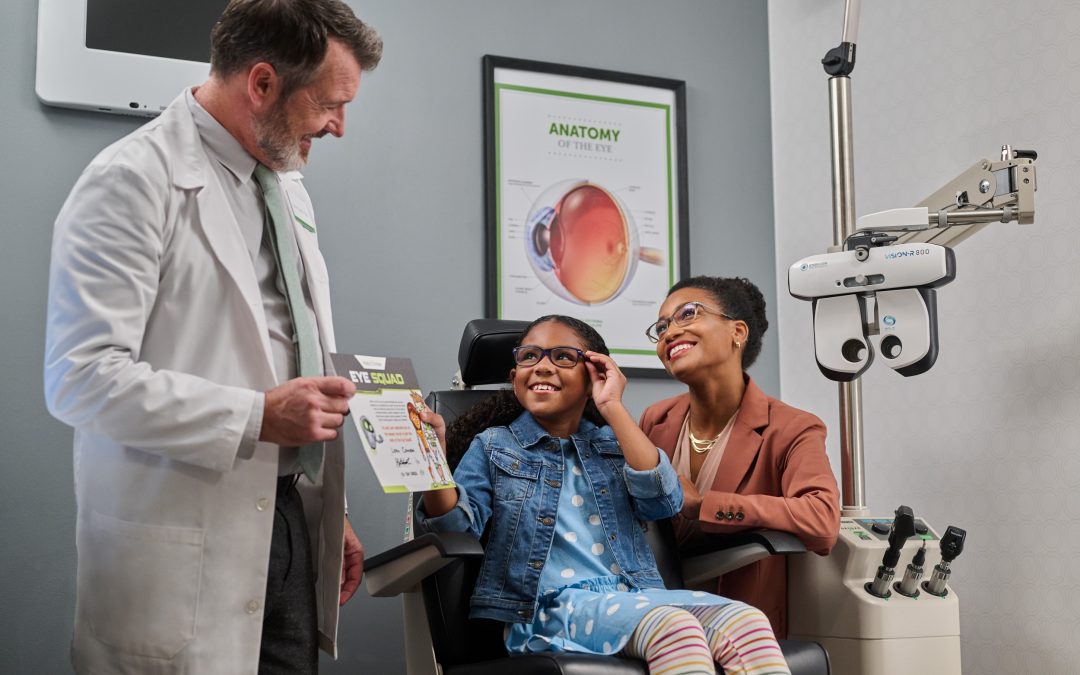
When these systems are in place, patients experience familiarity and clarity. They know who they are seeing, understand why recommendations are being made, and know what happens next. That consistency builds trust.
At Pearle Vision, this is where brand support can accelerate execution. Franchisees are not building every workflow from scratch. They can adapt proven playbooks, align teams faster, and maintain consistency across growth stages.
3) Smart eyewear is moving past novelty and into practical use cases
Smart eyewear has moved beyond novelty. The most successful adoption occurs when teams present it as a functional lifestyle solution rather than a gadget. The ideal users are clear: digital heavy professionals, commuters, active consumers, and patients seeking accessibility or productivity enhancements.
A simple workflow is driving results:
- Introduce smart eyewear only when there is a clear use case.
- Provide a quick hands-on demo in optical.
- Focus on day-to-day functional value—not hype.
Within qualified recommendations, many locations are seeing 10–20% conversion over 6–12 months, driven by demos rather than discounts.
Pearle Vision’s early involvement in emerging technologies, including initiatives like Nuance Audio, reflects a broader strategic direction: practical innovation that aligns with real patient needs.
4) Technology strategy is becoming more sequenced and more disciplined
One of the biggest mistakes I see is investing in technology in the wrong order. The most effective operators in 2026 are sequencing investments, so each layer supports the next.
I typically frame it this way:
- First: Foundational diagnostic technology that immediately improves exam quality and clinical confidence.
- Second: Workflow and utilization systems that improve scheduling, recall effectiveness, and provider productivity.
- Third: Specialty and emerging technologies once demand and team proficiency are established.
This sequence reduces risk and maximizes ROI. Pearle Vision’s network benefits from shared learning, aligned vendor partnerships, and training support—making adoption faster and more predictable than navigating the journey alone.
Healthy year one patterns often include:
- 5–10 point increases in exam utilization
- 5–15% growth in recommended care acceptance
- Recall effectiveness above 65–70%
- Revenue per exam is growing without longer exam times
- Patient satisfaction/NPS holding steady or improving
The objective isn’t more technology – it’s better outcomes and patient experience.
5) The digital + in-store model is now the standard
E-commerce is still growing, and digital expectations are not going away. But what I’m seeing is a clearer boundary between what digital tools do well and where in-person care remains irreplaceable.
Digital works extremely well for:
- scheduling and reminders
- pre-visit education
- convenience-driven communications
In-person expertise remains essential for:
- diagnosis and clinical interpretation
- personalized recommendations
- long-term care planning and trust building
The strongest models, including Pearle Vision, blend both. Patients can start digitally, but they still want confidence when decisions are clinical, personal, or complex.
This is an area where Pearle Vision’s model is well-positioned: pairing digital convenience with in-person clinical authority, local ownership, and trusted care within the community.
In 2026, optical franchising will favor operators who execute effectively at the intersection of people, technology, and strategy. At Pearle Vision, we believe growth should never come at the expense of patient trust. The future belongs to operators who scale both care quality and relationships.