

By Bryan Dylewski, Founder, Solenvia Caregivers
In senior home care, operators learn that the more challenging part isn’t finding clients. It’s delivering consistent, reliable care to those clients regardless of circumstances.
That consistency depends on a caregiver getting to a client’s home on time and ready to work. When that breaks down, everything else can break with it.
Caregiver reliability is the central operational challenge in senior home care. It’s also one the industry has been slow to address. For franchisees, that gap does create risk. However, it also represents a meaningful competitive advantage if addressed properly.
Caregiver Turnover Data is Just Half the Story
Most franchisees entering senior home care understand that caregiver turnover is high. PHI National’s workforce data puts annual home care turnover at roughly 75%, which is among the highest of any industry in the country. The standard response is to recruit more aggressively or adjust wages. Both are important, but they don’t address a more fundamental barrier, and that’s whether caregivers can reliably get to work.
Transportation is a chronic, but underappreciated strain. Many caregivers don’t have consistent access to a personal vehicle. In suburban and rural markets, public transit is limited or nonexistent. In urban markets, long commutes and traffic increase the likelihood of delays. Rideshare does offer a partial solution, but costs fluctuate during early morning shifts, evenings and severe weather, making it unsustainable over time.
The impact is predictable and includes missed visits, last-minute cancellations and rescheduled coverage. Client trust erodes, while caregiver morale suffers. Franchisees find themselves between a service promise and a logistics issue they didn’t anticipate.
A missed visit isn’t just a scheduling inconvenience. For a senior living alone, it can mean missed medications, a skipped meal, increased fall risk or hours of worry for a family counting on peace of mind. For a franchisee, it’s a client relationship – and referral source – at risk.
Why This Challenge Hits Franchisees Differently
Franchisees aren’t building from scratch. That’s a fundamental value proposition of the franchise model, incorporating proven processes, operational standards and infrastructure that doesn’t require reinvention. The challenge is that caregiver reliability, and the transportation barriers that drive it, is rarely treated as a system-level problem. It’s absorbed locally, meaning franchisees are left managing an unpredictable issue largely on their own.
The economics make this costly. Franchisees invest significantly in training, marketing and client acquisition.
Every missed visit is a hit to revenue, reputation and the referral relationships that sustain growth. Senior home care franchisees depend on discharge planners, hospital case managers and senior living communities to generate business.
Those referral sources expect that care will arrive when promised. When it doesn’t, the referrals stop.
The franchisee who can demonstrate reliable, on-time care delivery has an advantage over competitors who can’t. In a market where word-of-mouth and referral relationships drive a ton of new business, that advantage compounds fast.
Reliability Is a Franchisor’s Responsibility
My journey into this industry came through personal experience. When my father was battling ALS, our family navigated in-home care firsthand. We had capable, compassionate caregivers, but reliability was a continuous challenge. The issue wasn’t caregiver quality or commitment, but logistics. That experience showed me that caregivers can’t be expected to solve this problem on their own.
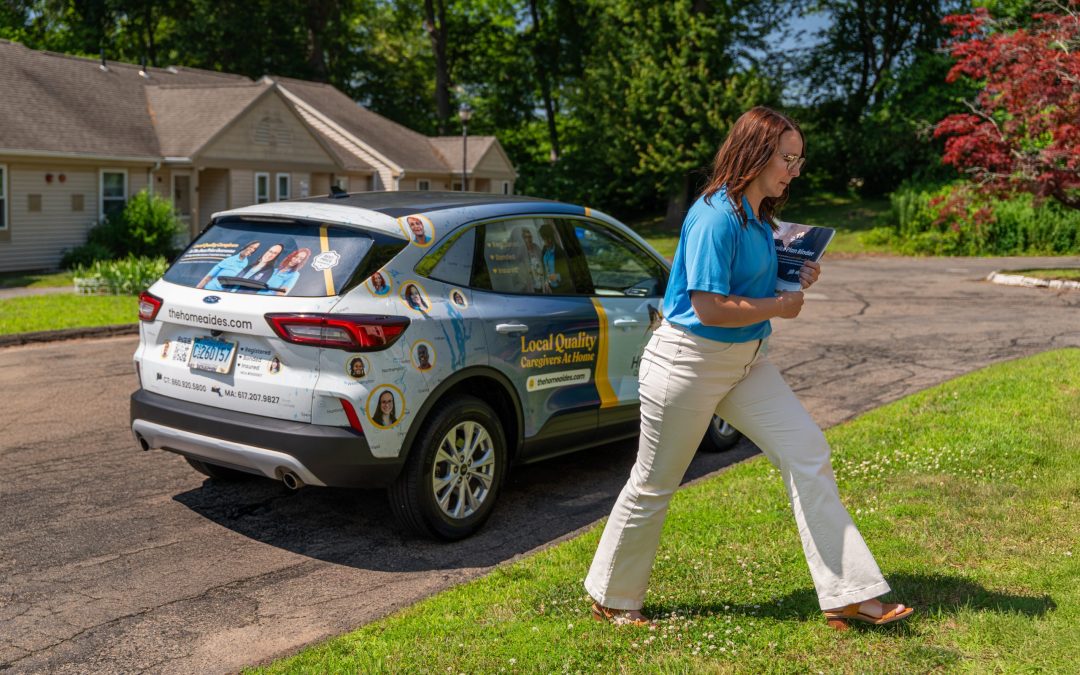
Franchise systems that take reliability seriously need to build it into their operating model. For senior home care, that means confronting the transportation issue directly. Absorbing the transportation burden at the corporate level, rather than pushing it onto individual caregivers and franchisees, leads to fewer missed visits, more consistent caregiver performance and stronger client retention.
The results show up most clearly under pressure. When significant winter weather recently disrupted operations across the Northeast, widespread caregiver callouts affected home care providers throughout the region. Since we’ve addressed transportation infrastructure across the system, care continued as normal, while other providers had real challenges getting to clients.
Response Time Should be a Franchise Growth Metric
Focusing on caregiver reliability also means optimizing response time. Across the senior home care industry, families often wait several days from initial inquiry to the start of services. In many cases, caregivers are available but can’t get to the client quickly and reliably.
Franchise systems that address transportation at the operational level can close that window significantly. Our ability to deploy a caregiver within 2-3 hours of a request is a meaningful departure from industry norms and a tangible differentiator across markets. For a family managing a hospital discharge or a sudden care gap, that response time is often the deciding factor in which provider they choose.
Speed to service builds trust! In this industry, trust is the business.
The Franchisees That Win Will Focus on Reliability First
The senior home care market is expanding at a rate few other franchise industries can match. The U.S. Bureau of Labor Statistics projects employment for home health and personal care aides to grow 17% until 2034. That’s well above the national average across all occupations. An aging population, longer life expectancy and a strong preference for aging in place are all sustaining that demand.
That growth creates genuine opportunity for franchisees, but capturing it requires building a business that families and referral sources trust.
Recruitment strategies, the right marketing, competitive wages and proper training programs are all vital. However, none of those investments protect a franchisee from the reality that care can’t be delivered if a caregiver can’t get there.
Caregiver reliability is the foundation of the client relationship, referral pipeline and the franchisee’s sustained growth. Franchisors that address it give operators a structural advantage that is difficult for competing brands to replicate.
Transportation, as an example, has long been treated as the caregiver’s problem to manage. The franchisees who benefit most from senior home care’s growth will be the ones whose systems made reliability a non-negotiable, while building the complete infrastructure for long-term franchisee success.

Bryan Dylewski is the founder of SOLENVIA Caregivers and a longtime leader in the senior care industry, with more than three decades of experience. He previously built and scaled a durable medical equipment company into one of the largest mobility providers in the country, operating across 42 states.
In 2014, Bryan founded SOLENVIA Caregivers following his personal experience caring for his father during his battle with ALS and has serviced more than 3,500 families throughout Connecticut and Massachusetts. Through franchising, SOLENVIA Caregivers is now looking to grow in markets nationwide.