By Vineeta Bhandari, Founder, CEO and CMO, Building Kidz School
My perspective on early childhood education is shaped by my roles as a founder and parent. Those lenses have reinforced a belief I’ve carried since I opened my first school more than 20 years ago – how children learn matters just as much as what they learn.
When I was searching for a preschool for my daughter, who was managing juvenile diabetes, I wasn’t looking for anything extraordinary. I wanted a place that would see her as a fully capable child and provide an environment where she could genuinely grow.
I couldn’t find it. So, I built it.
What I discovered in building that first school was that the gap I experienced as a parent wasn’t unique to my family. It pointed to something broader about what early childhood education has been, and the opportunity to make it greater.
The Brain Doesn’t Separate Learning from Experience
The first five years of a child’s life are among the most developmentally significant. During this period, the brain is forming the foundation for language, reasoning, emotional regulation and social connection. These aren’t just academic building blocks – they form the foundation a child carries into every stage of life.
For decades, early childhood education has largely treated academic learning and creative development as separate tracks. Children either sit down and learn, or they play. However, that framing misses how young children actually absorb and retain information.
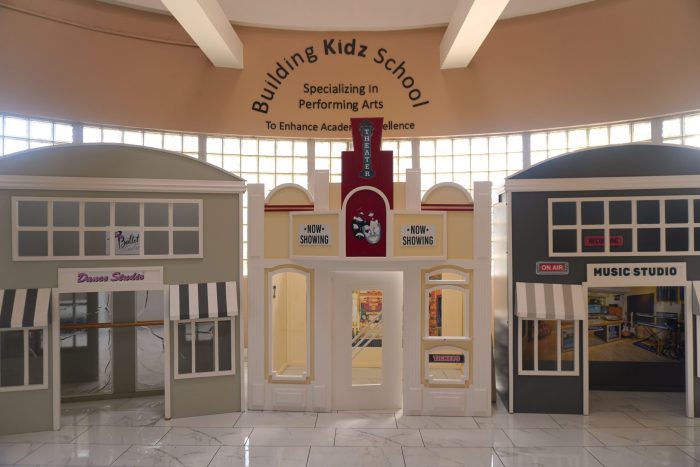
When learning is active and fun – involving movement, music, storytelling and performance – children aren’t just receiving content, they’re experiencing it. A song reinforces language patterns in a way that repetition alone doesn’t. Dance builds an understanding of rhythm and sequence. Theater develops confidence and self-expression in ways that structured exercises rarely can. Research in developmental psychology consistently supports what educators see daily – that emotional engagement deepens retention. When a child connects with what they’re learning, it stays with them.
This isn’t an argument against academic structure. Rather, it’s an argument for expanding what structure can look like. The most effective early childhood programs aren’t choosing between rigorous academics and creative development – they’re using creativity to make academics more developmentally appropriate and genuinely memorable. For children ages 2-6, that distinction really matters. These years only come once, and what happens throughout shapes how a child learns for the rest of their life.
In a Crowded Market, Philosophy is a Differentiator
Early childhood education is a resilient market.
Demand is tied to working families and long-term demographic trends rather than short-term economic cycles, which gives the category a stability that many franchise sectors don’t have. Within the category, however, performance can vary significantly from one concept to another.
The market is crowded. Many programs offer similar structures, schedules and messaging. In that environment, operational efficiency only goes so far. What creates lasting competitive advantage is a clear, well-defined educational philosophy. Something that families can see and feel, not just read about.
When a franchise concept is built around a genuine view on how children learn, it creates trust, and trust drives enrollment. Parents aren’t just considering price or proximity. They’re evaluating whether this is the right place for their child. A concept with a differentiating, clear approach to learning answers that question better than one that feels interchangeable with other market options.
Trust also drives retention. When families see consistent, visible growth in their child – more confidence and stronger engagement, which show up at home – they stay and refer. Word-of-mouth from genuinely satisfied families is one of the most powerful enrollment drivers in private preschool, and it flows directly from the quality of the child’s experience. It also shifts the conversation away from price. When an early education program’s value is clear and differentiated, families are less focused on comparing tuition rates, which supports more stable occupancy and predictable unit performance over time.
The Right Model Attracts the Right Operator
Early childhood education is not a passive investment. The operators who succeed in this space tend to share a common trait – they’re genuinely connected to what they’re building and the purpose behind the model.
That alignment is a meaningful performance indicator. An owner who believes in what their school delivers shows up differently than one who is simply running a location. It shapes how they hire teachers and directors, how they communicate with families and the culture they build within their schools. In a people-driven business, that culture is truly the product. Families experience it from their first visit, and it drives every metric that matters, including retention, referrals and community reputation.
An early childhood education franchise built around a clear educational philosophy tends to attract owners with that belief from the start. The result is operational and experiential consistency, which is what families are choosing when they enroll.
The Next Generation of This Category Will be Built on Substance
The early childhood education franchises that define the next 20 years won’t necessarily be the ones with the most schools. They’ll be the brands with a clear, well-executed point of view on how children learn, and the infrastructure to deliver that experience consistently at scale.
Arts integration – when genuinely embedded into a program’s foundation rather than offered as an add-on – has the power to create that experience. It doesn’t compete with traditional academics. It deepens them by making learning more active, memorable and aligned with how young children develop.
For franchisees evaluating this category, the most important question isn’t just whether a concept is financially viable. It’s whether the model is built on something substantive enough to earn lasting family trust and attract operators genuinely invested in the mission.
When those two things align, strong early childhood education franchises are built, and children are set up for long-term success.
Vineeta Bhandari is the esteemed founder and CEO & CMO of Building Kidz Worldwide, where she upholds a collaborative culture among franchisees, staff, and schools.
At the franchise level, Vineeta diligently exemplifies the organization’s vision and serves as the brand’s public face, ensuring franchisees feel connected to something truly exceptional. With a diverse range of responsibilities, she oversees crucial tasks such as awarding franchises, strategically ensuring the success and growth of franchisees through effective marketing, curriculum enhancements, ongoing training, and the effective integration of performing arts.
Furthermore, she remains actively engaged in corporate social responsibility by focusing on educating and supporting underprivileged communities.
Vineeta’s dedication to Early Childhood Education dates back to 2002. Prior to starting Building Kidz, she gained invaluable experience working at reputable companies such as Murdock and Associates, Sun Micro Systems, Lam Research, and Levis Strauss, spanning the high-tech and low-tech sectors.
.